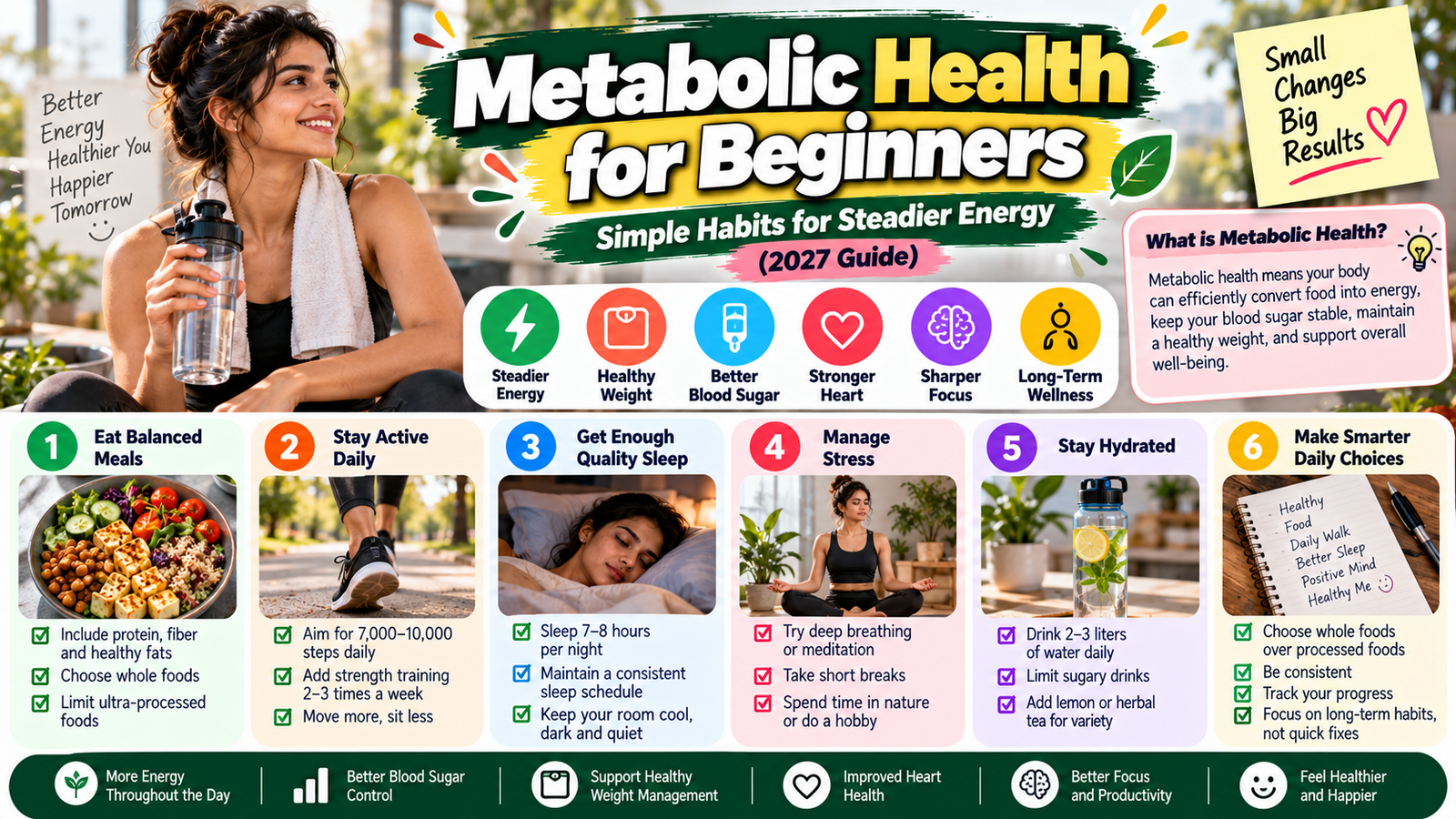
Last updated: October 2026. This guide is general education, not medical advice. If you have diabetes, take medication, are pregnant, or have ever had an eating disorder, talk to your doctor or dietitian before changing how you eat or exercise.
Introduction: What Metabolic Health Means (and What It Does Not)
Metabolic health describes how well your body handles energy. Doctors usually look at a handful of markers together: blood sugar, blood pressure, blood fats (cholesterol and triglycerides) and the amount of fat around your waist. When several of these drift out of range, the pattern is called metabolic syndrome, which raises the risk of type 2 diabetes and heart disease.
You cannot feel most of these numbers. What you may notice instead is energy dips, strong cravings and poor sleep. Those symptoms have many possible causes, so they are a reason to look at your habits, not a diagnosis. This guide covers simple, evidence-informed habits with no detox plans and no extreme diets.
Quick Answer
- Sleep at least 7 hours on most nights. It affects hunger and blood sugar.
- Take a 10 to 15 minute walk after your biggest meal.
- Do strength exercises twice a week. Muscle helps your body use glucose.
- Build meals around protein, fiber and healthy fats, not refined carbs alone.
- Swap sugary drinks for water, sparkling water or unsweetened tea.
- Check your numbers with a doctor instead of guessing.
The Markers Doctors Often Check
These ranges are commonly used in the United States. Labs and countries differ (many use mmol/L), and only your doctor can interpret your results.
| Marker | What it tells you | Commonly used reference range |
|---|---|---|
| Fasting blood glucose | Blood sugar after not eating for 8 hours or more | Under 100 mg/dL is typical; 100 to 125 is the prediabetes range; 126 or higher on repeat tests suggests diabetes |
| HbA1c | Average blood sugar over about 3 months | Under 5.7% is typical; 5.7% to 6.4% is the prediabetes range; 6.5% or higher suggests diabetes |
| Blood pressure | Force of blood against artery walls | Under 120/80 mmHg is considered normal |
| Triglycerides | A type of blood fat | Under 150 mg/dL |
| HDL cholesterol | The so-called good cholesterol | Above 40 mg/dL for men, above 50 mg/dL for women |
| Waist circumference | Fat around the middle of the body | Under 40 inches for men, under 35 inches for women (lower cut-offs apply to some ethnic groups) |
Why Energy Rises and Falls During the Day
After you eat, blood sugar rises and the hormone insulin helps move it into your cells. This is normal, and a rise after meals is not a problem by itself. Some people feel sleepy or hungry again soon after a meal made mostly of refined carbohydrates, such as white bread, sweets or sugary drinks. Adding protein, fiber and fat slows digestion and tends to make energy steadier.
Poor sleep matters too. Studies show that even a few nights of short sleep can make the body handle glucose less well and increase hunger. Low energy has many other causes, so do not assume it is metabolic:
| Possible cause of low energy | Clues | What to do |
|---|---|---|
| Short or broken sleep | Tired despite a normal day, snoring, waking unrefreshed | Fix sleep routine; ask a doctor about sleep apnea if you snore loudly |
| Low iron or other deficiencies | Pale skin, breathlessness, heavy periods | Ask your doctor about blood tests |
| Thyroid problems | Weight change, feeling cold or overheated, dry skin | Ask your doctor about thyroid tests |
| Low mood or burnout | Loss of interest, poor concentration | Talk to a doctor or mental health professional |
| Dehydration or too much caffeine | Headache, jitters, afternoon crash | Drink water; limit caffeine late in the day |
Seven Beginner Habits That Support Metabolic Health
| Habit | Why it helps | How to start this week | Time |
|---|---|---|---|
| Sleep 7 or more hours | Public health guidance recommends at least 7 hours for adults; poor sleep is linked to worse blood sugar control and stronger cravings | Fix your wake-up time and switch screens off 30 to 60 minutes before bed | No extra time |
| Walk after meals | Some studies find short walks after eating lower the blood sugar rise | 10 to 15 minutes after your largest meal | 10 to 15 min |
| Strength train twice a week | Muscle uses glucose; health agencies recommend muscle-strengthening activity at least 2 days a week | Squats, push-ups against a wall or counter, resistance bands | 20 to 30 min |
| Protein and fiber at every meal | Slows digestion and helps you feel full | Add beans, eggs, yogurt, tofu, vegetables or whole grains | Part of meal prep |
| Swap liquid sugar | Sugary drinks deliver sugar quickly with little fullness | Water, sparkling water, unsweetened tea or coffee | None |
| Keep a regular eating pattern | Long gaps followed by very large meals can leave you ravenous; fasting suits some people but not all | Choose meal times that fit your day and stick to them | None |
| Manage stress and alcohol | Chronic stress and heavy drinking disturb sleep, appetite and blood sugar | A 10-minute wind-down routine; keep alcohol within local guidelines | 10 min |
Build a Steadier Plate
A simple way to build meals is to fill your plate in this order. The proportions are a guide, not a rule.
| Part of the plate | Examples | Rough share |
|---|---|---|
| Vegetables and fruit | Leafy greens, broccoli, peppers, tomatoes, berries | About half |
| Protein | Beans, lentils, eggs, tofu, fish, chicken, yogurt | About a quarter |
| Fiber-rich carbohydrates | Brown rice, oats, whole-grain bread, potatoes with skin, quinoa | About a quarter |
| Healthy fats | Olive oil, nuts, seeds, avocado | A small amount |
Example Day (Vegetarian-Friendly)
| Meal | Example | Why it works |
|---|---|---|
| Breakfast | Greek yogurt with berries and chopped nuts, or eggs with whole-grain toast and tomato | Protein and fiber early in the day |
| Lunch | Lentil and vegetable soup with a side salad | Slow-digesting carbohydrates and plenty of fiber |
| Snack | Apple with peanut butter | Fiber with protein and fat |
| Dinner | Baked fish or tofu with roasted vegetables and brown rice | Balanced plate; walk for 10 to 15 minutes afterwards |
Fiber tip: many adults eat less fiber than recommended. A common target is about 25 to 35 grams a day. Increase slowly and drink water so your digestion can adjust.
Myths and Facts
| Myth | Fact |
|---|---|
| You must avoid all carbohydrates | Carbohydrates are not the enemy. Whole grains, beans, fruit and vegetables come with fiber and nutrients. |
| Every blood sugar rise is harmful | A rise after eating is normal. What matters is your overall pattern and your doctor’s test results. |
| Detox teas and cleanses reset your metabolism | Your liver and kidneys already do this work. These products have little evidence and some are unsafe. |
| Everyone should wear a glucose monitor | These devices are designed for people with diabetes. Evidence that they improve health in people without diabetes is limited, so ask your doctor first. |
| Thin people are always metabolically healthy | People of any weight can have high blood pressure, blood sugar or triglycerides. Testing is the only way to know. |
| Cinnamon or vinegar fix blood sugar | Evidence is limited and small. Do not rely on them instead of proven habits or medical care. |
A 4-Week Starter Plan
| Week | Focus | Goal |
|---|---|---|
| 1 | Sleep and drinks | Fixed wake-up time; swap one sugary drink a day for water |
| 2 | Movement after meals | A 10-minute walk after your biggest meal on 5 days |
| 3 | Strength | Two 20-minute strength sessions |
| 4 | Plate and checkup | Add protein and fiber to every meal; book a routine health check |
When to See a Doctor
- Excessive thirst, frequent urination, unexplained weight loss, blurry vision or slow-healing sores.
- Extreme tiredness that does not improve with rest.
- A family history of type 2 diabetes or early heart disease.
- A history of gestational diabetes or polycystic ovary syndrome.
- High blood pressure readings at home or at a pharmacy.
Ask whether a fasting glucose or HbA1c test, a cholesterol panel and a blood pressure check are right for you. Do not start prescription changes or supplements without medical advice.
Common Mistakes to Avoid
- Crash dieting, which is hard to sustain and can harm your health.
- Cutting out whole food groups without medical advice.
- Relying on supplements instead of sleep, movement and meals.
- Looking only at weight and ignoring blood pressure, sleep and fitness.
- Comparing your results with someone else’s. Bodies respond differently.
- Changing everything at once. Add one habit every week.
Frequently Asked Questions
What is the fastest way to improve metabolic health?
There is no quick fix. Sleep, regular movement, enough fiber and protein, and fewer sugary drinks make the biggest difference for most people, and the effects build over weeks and months.
Do I need to lose weight?
Not necessarily. Habits such as sleep, activity and diet quality matter at any weight. If your doctor recommends weight loss, ask for a plan that suits you.
Is intermittent fasting good for metabolic health?
Research is mixed. Some people find it easy to follow and others do not. It is not suitable for everyone, including people with diabetes who take medication or anyone with a history of disordered eating. Ask your doctor first.
How long until I feel steadier energy?
Some people notice better energy within a couple of weeks of sleeping better and eating more protein and fiber. Blood test changes take longer and should be checked with your doctor.
Are supplements necessary?
Most people do not need them to improve metabolic health. If you suspect a deficiency, get tested and follow your doctor’s advice.
Sources and Further Reading
- Centers for Disease Control and Prevention (physical activity, sleep and diabetes prevention)
- National Institute of Diabetes and Digestive and Kidney Diseases
- NHS (healthy eating and exercise guidance)
- Harvard T.H. Chan School of Public Health: The Nutrition Source
Related Guides
Start moving with our 30 day walking plan for beginners, and make steadier meals easier with high protein vegetarian meal prep.




Leave a Reply