Last updated: October 2026. This guide is general information, not medical advice. If you have a health condition, are pregnant, or have not exercised in a long time, check with a doctor before starting.
Introduction: Why Walking Is the Easiest Way to Start
Walking needs no gym, no equipment and no experience. It is also one of the easiest habits to keep, because you can do it almost anywhere. The hard part is not the walking. It is knowing how much to do, how fast to go and how to build up without burning out.
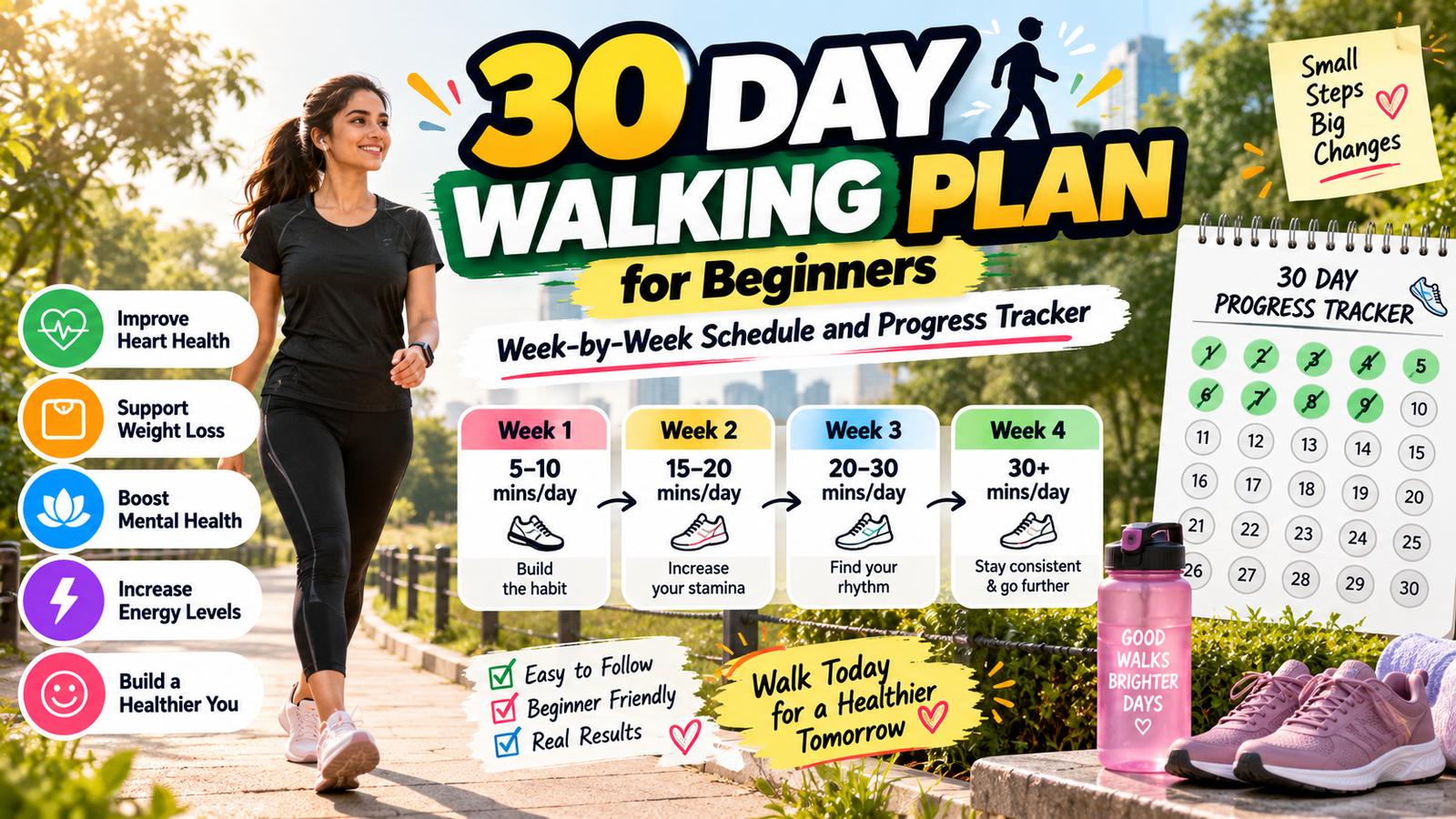
This 30-day plan starts with just 15 minutes and builds to a full week of walking in four steps. It includes a week-by-week table, an intensity guide, a sample day, tips for tracking progress and answers to common questions.
Quick Answer
- Week 1: walk 15 to 20 minutes, three times, at an easy pace.
- Weeks 2 and 3: add time and a few brisk minutes.
- Week 4: build toward about 150 minutes for the week, which matches the commonly recommended minimum for adults.
- Pace test: you should be able to talk but not sing.
- Rest days are part of the plan. They help your legs and your motivation.
Who This Plan Is For
- Adults who are new to exercise or returning after a long break.
- People who sit most of the day and want a gentle start.
- Anyone who wants a simple routine without a gym.
Talk to a doctor first if you have heart or lung conditions, joint problems, diabetes, high blood pressure, are pregnant, or feel chest pain, dizziness or unusual breathlessness when you move. Stop and get medical help if those symptoms appear during a walk.
What Counts as Easy, Brisk and Hard Walking?
| Level | How it feels | Talk test | Rough steps per minute |
|---|---|---|---|
| Easy | Relaxed, like a stroll | You can chat or even sing | Around 70 to 90 |
| Brisk | Faster than normal, slightly warm, breathing a bit heavier | You can talk in full sentences but not sing | Around 100 or more |
| Hard | Fast, strongly breathless | You can only say a few words | Often with hills or speed-walking |
The steps-per-minute figures are common rules of thumb. Your own numbers depend on height, stride and fitness, so use the talk test as your main guide.
The 30-Day Walking Plan: Week by Week
| Week | Mon | Tue | Wed | Thu | Fri | Sat | Sun | Weekly total |
|---|---|---|---|---|---|---|---|---|
| 1 | 15 min easy | Rest | 15 min easy | Rest | 15 min easy | 20 min easy | Rest | About 65 min |
| 2 | 20 min easy | Rest | 20 min with 5 brisk | 15 min easy | 20 min with 5 brisk | 25 min easy | Rest | About 100 min |
| 3 | 25 min with 10 brisk | 15 min easy | 25 min with 10 brisk | Rest | 25 min with 10 brisk | 30 min easy | 15 min easy | About 135 min |
| 4 | 30 min with 15 brisk | 20 min easy | 30 min with 15 brisk | 20 min easy | 30 min with 15 brisk | 35 min easy | Rest | About 165 min |
Days 29 and 30: repeat a Week 4 Monday walk, then finish with one longer walk of 35 to 40 minutes at a pace you can hold comfortably. Note how you feel compared with Day 1.
How to read the table
- Easy means the whole walk is at a relaxed pace.
- With 5 brisk means walk easy, then add 5 minutes at a brisk pace in the middle, then finish easy.
- Rest means no planned walk. Light movement around the house is fine.
- If a week feels too hard, repeat it before moving on. There is no prize for rushing.
A Sample Walk: Week 2, Wednesday (20 minutes)
| Time | What to do |
|---|---|
| 0 to 3 min | Slow warm-up pace |
| 3 to 8 min | Easy pace |
| 8 to 13 min | Brisk pace, using the talk test |
| 13 to 17 min | Easy pace |
| 17 to 20 min | Slow cool-down, then a gentle calf and hamstring stretch |
What You Need
- Comfortable shoes with some cushioning and room for your toes. Shoes that rub or feel tight are the most common reason beginners quit.
- Weather-appropriate clothing, such as breathable layers and a light rain jacket.
- Water, especially for walks over 30 minutes or in warm weather.
- A timer or free phone app to track minutes.
- Reflective or bright clothing if you walk near traffic or in low light.
How to Track Your Progress
| What to track | Why it helps | Example |
|---|---|---|
| Minutes walked | Shows that you are building the habit | Week 1: 65 minutes. Week 4: 165 minutes |
| Route time for the same loop | Shows improving fitness without needing a scale | Loop takes 24 minutes in Week 1 and 21 in Week 4 |
| How you feel after a walk | Energy and mood are real signs of progress | Rate 1 to 5 each day |
| Missed days and why | Helps you fix the real obstacle | Rain, work, tiredness |
Weight on the scale is a slow and noisy measure. If weight loss is your goal, walking helps, but food choices and sleep matter too. Do not expect dramatic changes in 30 days.
Steps, Minutes or Distance: What Should You Count?
For beginners, minutes are the simplest target, because they do not depend on your stride length or the app you use. Steps are useful as a background measure. The famous 10,000 steps goal is a popular round number, not a rule, and research suggests health benefits start well below it. Think of steps as a bonus, not a pass or fail test.
Common Mistakes Beginners Make
- Going too fast too soon. A sore week can end the habit. Build gradually.
- Wearing the wrong shoes. Replace worn-out shoes and avoid new shoes on a long first walk.
- Skipping rest days. Muscles and joints adapt during rest.
- Checking only the steps counter. A short, brisk walk can be worth more than a slow, long one.
- Waiting for perfect weather. Keep a wet-weather option, such as walking indoors or in a mall.
- Giving up after one missed day. Just restart the next day.
Walking at Home or in Bad Weather
| Option | How to do it | Tip |
|---|---|---|
| Walk in place or around the house | Aim for a steady rhythm for 10 to 15 minutes at a time | Split the day into two or three short sessions |
| Treadmill | Start at a comfortable speed and add a slight incline later | Hold the rails only for balance, not support |
| Indoor mall or large store | Walk laps at your usual pace | Go at quiet hours |
| Stairs | Climb a few flights as part of a walk | Go slowly at first if your knees feel sensitive |
Frequently Asked Questions
How long should a beginner walk each day?
Start with 15 to 20 minutes, three or four days a week, and build up. Many adults aim for about 150 minutes of moderate activity a week, but you can reach that gradually.
Is walking enough exercise?
Walking is excellent aerobic exercise. Health guidelines also recommend muscle-strengthening activity on two or more days a week, so consider adding simple bodyweight exercises later.
Can I lose weight by walking?
Walking can support weight loss, especially alongside sensible eating. A 30-minute brisk walk may burn roughly 100 to 200 calories, depending on body weight and pace, so results come from consistency over time.
Is it better to walk in the morning or evening?
The best time is the one you will stick to. Morning walks suit early risers, and an evening walk can help you unwind. Avoid very hot hours in summer.
What should I do if my feet or shins hurt?
Slow down, check your shoes and rest for a day or two. If the pain is sharp, getting worse or lasts more than a few days, see a healthcare professional.
Sources and Further Reading
- U.S. Centers for Disease Control and Prevention (physical activity guidelines)
- NHS (physical activity guidelines for adults)
- World Health Organization (physical activity)
Related Guides
Pair your walking habit with simple food prep. Read High Protein Vegetarian Meal Prep: A Full Week Plan With Shopping List.




Leave a Reply