Last updated: 24 November 2026. This is general nutrition information and not medical advice. If you think you may have low iron, get a blood test before you take supplements.
Quick Answer
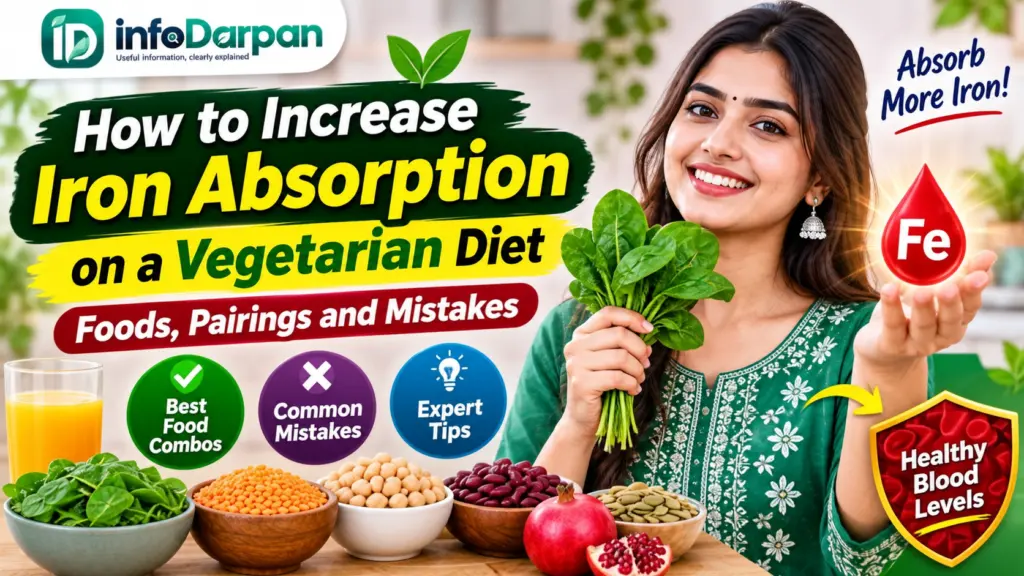
- Need: the NIH says the iron requirement is 1.8 times higher for vegetarians than for people who eat meat.
- Absorption: about 14% to 18% of iron is absorbed from mixed diets, and 5% to 12% from vegetarian diets, according to the NIH.
- Boost it: eat iron-rich plant foods with vitamin C foods such as citrus, tomatoes, sweet peppers, broccoli or strawberries.
- Limit it: tea, coffee and cocoa can block iron when taken with a meal. Leave about an hour between the meal and the drink.
- Prepare smartly: soaking, sprouting, fermenting and leavening reduce phytates, which also block iron.
- Test first: do not start iron supplements without a doctor’s advice.
Introduction: Why Plant Iron Is Harder to Absorb
Iron helps your blood carry oxygen around the body. Plants contain only non-heme iron, which the body absorbs less easily than the heme iron in meat and fish. This is why the US National Institutes of Health (NIH) says vegetarians need almost twice as much iron as people who eat meat.
The good news is that small changes in what you eat together and when you drink tea or coffee can help. This guide explains iron absorption on a vegetarian diet with simple, sourced tips.
Table of Contents
How Much Iron Do You Need?
These are the US Recommended Dietary Allowances (RDAs) from the NIH. They assume a mixed diet. For vegetarians, the NIH says the requirement is 1.8 times higher.
| Age | Male (mg/day) | Female (mg/day) | Pregnancy | Lactation |
|---|---|---|---|---|
| 9 to 13 years | 8 | 8 | – | – |
| 14 to 18 years | 11 | 15 | 27 | 10 |
| 19 to 50 years | 8 | 18 | 27 | 9 |
| 51 years and over | 8 | 8 | – | – |
Needs are higher for menstruating women because of blood loss. Other countries set their own recommendations, so ask your doctor or dietitian what is right for you.
7 Ways to Absorb More Iron From Plants
- Add vitamin C to iron-rich meals. The NIH says your body absorbs plant iron better with foods that contain vitamin C, such as citrus fruits, strawberries, sweet peppers, tomatoes and broccoli. A squeeze of lemon on lentils or dal is an easy habit.
- Keep tea and coffee away from meals. Polyphenols in tea, coffee and cocoa reduce non-heme iron absorption. In a controlled trial of 12 women, tea taken with a meal reduced absorption, and waiting one hour after the meal cut the inhibiting effect by about half. Consumer group Which? likewise says a drink an hour before or after a meal has little effect.
- Soak beans and lentils. Phytates in grains and beans block iron. Soaking, sprouting, fermenting and leavening (as in sourdough bread) reduce phytate levels.
- Choose iron-fortified foods. Fortified breakfast cereals and flours add iron. Check the label for the amount per serving.
- Space out calcium. Calcium can reduce iron absorption. The NIH suggests taking calcium and iron supplements at different times of day.
- Eat a variety. Combine beans, lentils, tofu, seeds, nuts and whole grains through the day instead of relying on one food.
- Cook in an iron pan if you can. This is a popular tip, but the sources we reviewed did not measure its effect, so treat it as a bonus and not a replacement for the steps above.
An honest note: The NIH points out that in a typical western diet, the effects of enhancers and inhibitors are small for most people’s iron status. These tips matter most if your iron intake is low or you rely heavily on plants.
Plant Foods That Contain Iron
| Food (serving) | Iron (mg) |
|---|---|
| Breakfast cereal fortified with 100% of the daily value (1 serving) | 18 |
| White beans, canned (1 cup) | 8 |
| Lentils, boiled (half cup) | 3 |
| Spinach, boiled (half cup) | 3 |
| Tofu, firm (half cup) | 3 |
| Kidney beans, canned (half cup) | 2 |
| Dark chocolate, 45% to 69% cacao (1 ounce) | 2 |
Source: NIH Office of Dietary Supplements. Amounts on the table are iron content, not what you absorb. Some foods, such as spinach, contain iron but also compounds like polyphenols that lower how much your body takes in, so spinach is not as good a source as the number suggests.
What Blocks Iron Absorption
| Blocker | Found in | What to do |
|---|---|---|
| Polyphenols and tannins | Black tea, herbal teas, coffee, cocoa, red wine | Drink them about an hour before or after meals |
| Phytates | Grains, beans, nuts, seeds | Soak, sprout, ferment or leaven |
| Calcium | Milk products, calcium supplements | Take calcium and iron supplements at different times |
Interestingly, a research review noted that adding milk to tea or coffee made little or no difference to how strongly they blocked iron. Also, phytic acid may have health benefits of its own, so you do not need to avoid grains and beans, just prepare them well.
A Simple Day of Iron-Friendly Meals
| Meal | Idea | Why it helps |
|---|---|---|
| Breakfast | Fortified cereal with strawberries; tea after about an hour | Iron plus vitamin C, and tea spaced away from the meal |
| Lunch | Lentil dal with lemon, plus a tomato and pepper salad | Vitamin C foods with beans and lentils |
| Snack | Roasted chickpeas or a handful of nuts and seeds | Extra plant iron |
| Dinner | Tofu stir-fry with broccoli and sweet peppers; sourdough bread | Vitamin C plus leavened bread with lower phytate |
For more plant protein ideas, see our guide on how much protein you need, with a vegetarian sources table.
Supplements and Safety
- Test before you supplement. Doctors use blood tests such as hemoglobin and serum ferritin to check iron status. The NIH says a ferritin level below 30 micrograms per litre suggests iron deficiency.
- More is not better. High doses of iron supplements, especially on an empty stomach, can cause stomach upset, constipation, nausea and vomiting, and large amounts can cause more serious effects.
- Hemochromatosis: people with this inherited condition should avoid iron and vitamin C supplements.
- Keep out of reach of children. The NIH says accidental overdose of iron products is a leading cause of fatal poisoning in children under 6.
- Talk to a professional if you are pregnant, have heavy periods, or feel unusually tired, because the cause may not be diet.
Frequently Asked Questions
Do vegetarians need more iron?
Yes. The NIH says the requirement is 1.8 times higher for vegetarians because plant (non-heme) iron is absorbed less well.
What helps the body absorb iron from plants?
Vitamin C foods such as citrus fruits, tomatoes, sweet peppers, strawberries and broccoli eaten in the same meal.
Can I drink tea or coffee with meals?
It is better not to. Tea and coffee reduce iron absorption when taken with a meal. Waiting about an hour before or after the meal reduces the effect.
Is spinach a good source of iron?
Spinach contains iron, but the NIH notes it has low bioavailability because of compounds that block absorption. Lentils, beans, tofu and fortified foods paired with vitamin C are better choices.
Should I take an iron supplement?
Only if a doctor advises it after a blood test. Too much iron can cause side effects and is not safe for everyone.
Sources and Official Links
- NIH Office of Dietary Supplements: Iron, fact sheet for consumers
- NIH Office of Dietary Supplements: Iron, fact sheet for health professionals
- PubMed: effect of a 1-hour interval between a meal and tea on iron absorption
- PubMed: inhibition of non-haem iron absorption by polyphenol-containing drinks
- Medical Journal of Australia: Iron and vegetarian diets
- Which?: The best and worst food pairings for nutrient absorption
Related Guides
Read our guides on protein for vegetarians, brain food for focus and memory and metabolic health for beginners.