

Last updated: October 27, 2026. This guide is for general information and is not medical advice. Dengue can become serious within hours, so see a doctor if you or your child has a fever in a dengue area. Do not treat warning signs at home.
Introduction: Dengue Fever Symptoms and Why They Matter in India Right Now
Dengue fever symptoms can look like any other viral fever at first, which is why people often wait too long to get tested. Dengue is spread by infected mosquitoes, and in India cases usually rise after the monsoon. According to the UK’s TravelHealthPro update of 26 October 2026, India had reported 70,140 dengue cases in 2026 up to 19 October.
This guide explains dengue fever symptoms, the warning signs of severe dengue that can appear after the fever drops, what to take and what to avoid, what we know about platelet myths, how to prevent dengue and when to see a doctor.
Table of Contents
Quick Answer
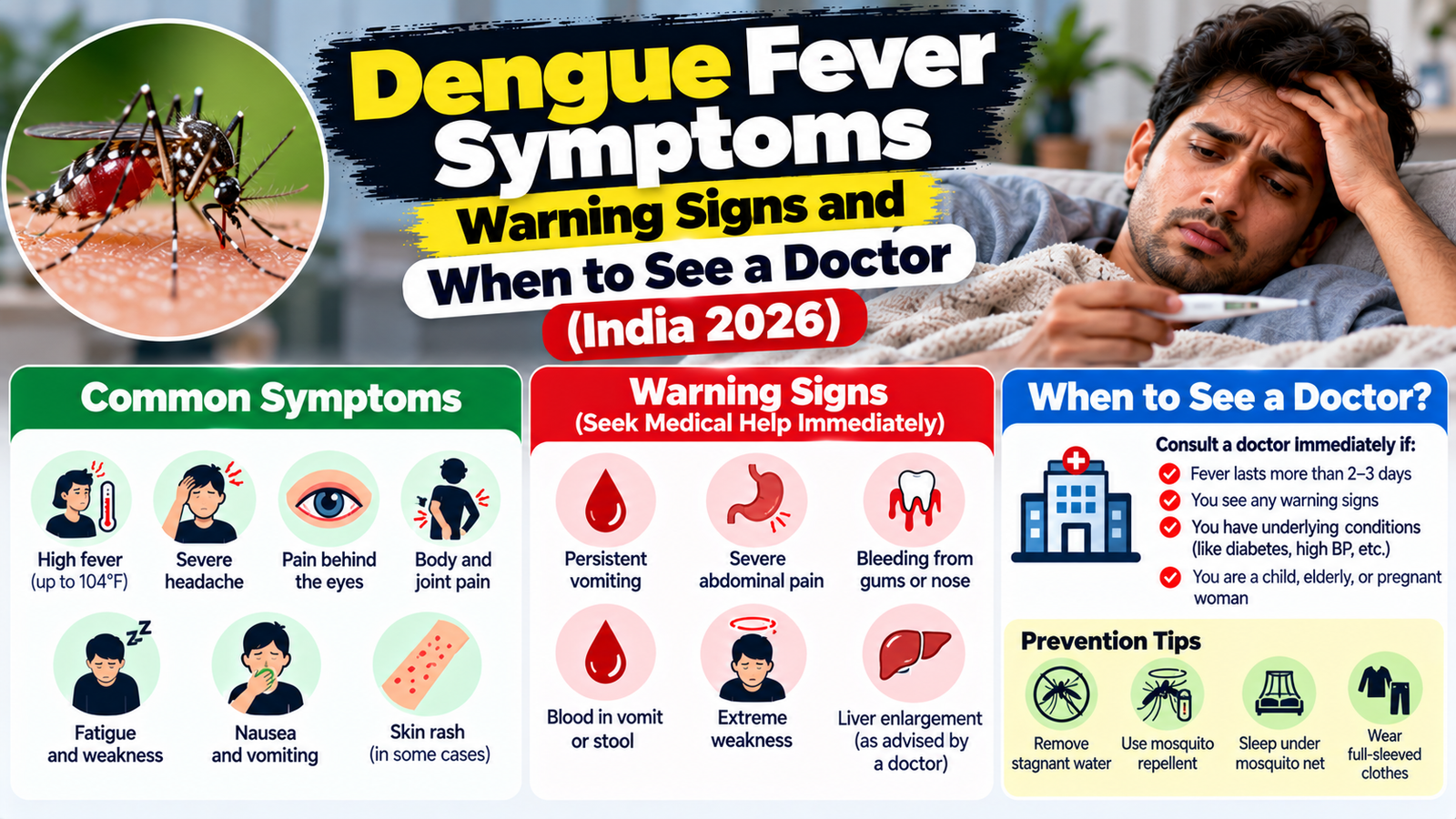
- Dengue is suspected when a high fever, up to 40 degrees Celsius, comes with two of these: severe headache, pain behind the eyes, muscle, joint or bone pain, nausea or vomiting, swollen glands or a rash.
- Symptoms usually start 4 to 10 days after a bite and last about 2 to 7 days. Many infections are mild or have no symptoms.
- There is no specific medicine for dengue. Rest, drink plenty of fluids and use paracetamol (acetaminophen) for fever and pain.
- Do not take aspirin or ibuprofen, because they can raise the risk of bleeding.
- Warning signs of severe dengue usually begin 24 to 48 hours after the fever goes away. Go to a clinic or emergency room immediately if you see them.
- Only a blood test can confirm dengue, because its symptoms are similar to chikungunya and Zika.
Dengue Fever Symptoms: What to Look For
| Symptom | What it feels like |
|---|---|
| High fever | Sudden fever, which can reach about 40 degrees Celsius |
| Severe headache | Strong headache, often with pain behind the eyes |
| Pain behind the eyes | Pain that gets worse when you move your eyes |
| Muscle, joint and bone pain | Body pain that can be intense |
| Nausea and vomiting | Feeling sick or being sick |
| Swollen glands | Tender lumps in the neck or elsewhere |
| Rash | A skin rash that may appear a few days after the fever |
Symptoms usually develop 4 to 10 days after the bite and improve in about a week. Younger children and people infected for the first time often have milder symptoms. People who have had dengue before are at higher risk of severe dengue.
Dengue Warning Signs: When It Becomes an Emergency
The most dangerous phase can begin when the fever is dropping, so a person who seems to be getting better may still need care. According to the CDC, warning signs usually begin in the 24 to 48 hours after the fever has gone away.
| Warning sign | What to do |
|---|---|
| Belly pain or tenderness | Go to a clinic or emergency room immediately |
| Vomiting at least 3 times in 24 hours | Go immediately |
| Bleeding from the nose or gums | Go immediately |
| Vomiting blood or blood in the stool | Go immediately |
| Feeling very tired, restless or irritable | Go immediately |
| Fast breathing or trouble breathing | Go immediately |
Severe dengue is a medical emergency and can become life-threatening within a few hours. Do not wait for the next day.
What to Take and What to Avoid
| Do | Do not |
|---|---|
| Rest as much as you can | Do not take aspirin or ibuprofen, which can increase bleeding risk |
| Drink plenty of fluids, such as water or oral rehydration drinks | Do not self-treat warning signs at home |
| Use paracetamol (acetaminophen) for fever and pain, in the dose your doctor advises | Do not take antibiotics for dengue unless a doctor prescribes them for another reason |
| Protect yourself from mosquito bites while you are sick, so you do not pass the virus on | Do not delay a test when you have a high fever in a dengue area |
The virus can be found in the blood during the first week of illness, so a sick person who is bitten by a mosquito can spread dengue to others.
Platelet Count: What We Know and Do Not Know
A doctor decides when your blood counts need to be checked and what treatment is needed. We did not find strong evidence in the sources we reviewed that juices or supplements treat dengue or raise platelets, so do not delay medical care for a home remedy. Ask your doctor before you try any herbal product, especially if you take other medicines.
Dengue vs Other Fevers
| Illness | Similar symptoms | How to tell |
|---|---|---|
| Dengue | High fever, headache, body pain, rash | Blood test |
| Chikungunya and Zika | Similar fever, joint pain and rash | Blood test, as they are spread by the same mosquitoes |
| Scrub typhus and malaria | Fever and body aches | Blood tests, so do not guess |
For a deeper look at another fever that is rising in some areas, see our guide to scrub typhus symptoms.
How to Prevent Dengue
- Remove stagnant water around your home, such as from coolers, pots, tyres and flower pots, because mosquitoes breed there.
- Use mosquito repellent, nets and screens, and wear long sleeves.
- Keep water containers covered.
- If someone at home has dengue, protect them from mosquito bites so that the virus does not spread.
When to See a Doctor
| Situation | What to do |
|---|---|
| Fever with severe headache or body pain in a dengue area | See a doctor and ask about a dengue test |
| A fever that is not settling after 2 to 3 days | See a doctor |
| Any warning sign listed above | Go to a hospital immediately |
| A child, pregnant woman or older adult with fever | See a doctor early |
| A person who had dengue before and has a new fever | See a doctor, because the risk of severe dengue is higher |
Final Thoughts on Dengue Fever Symptoms
Know the dengue fever symptoms, drink plenty of fluids, use only paracetamol for fever and watch carefully for the warning signs that can appear after the fever drops. Do not take aspirin or ibuprofen, and go to a hospital at once if you see any warning sign. This guide is general information, so follow your doctor’s advice.
Frequently Asked Questions
What are the first dengue fever symptoms?
Usually a sudden high fever with severe headache, pain behind the eyes, and muscle and joint pain. Nausea, vomiting, swollen glands or a rash can follow.
How long do dengue fever symptoms last?
Symptoms usually last about 2 to 7 days, and most people improve in about a week. Severe dengue can start when the fever drops.
Can I take ibuprofen or aspirin for dengue?
No. Health agencies advise paracetamol (acetaminophen) and say to avoid aspirin and ibuprofen because they can increase the risk of bleeding.
What are the warning signs of severe dengue?
Belly pain, repeated vomiting, bleeding from the nose or gums, vomiting blood or blood in stool, and extreme tiredness or restlessness. Seek care immediately.
How is dengue confirmed?
With a blood test, because dengue symptoms are similar to chikungunya, Zika and other fevers.
Update Log
| Date | Update |
|---|---|
| October 27, 2026 | First version based on CDC dengue guidance, WHO-based clinical summaries and the TravelHealthPro India update |
Sources and Official Links
- CDC: manage dengue
- World Health Organization: dengue and severe dengue
- TravelHealthPro: India
- Pennsylvania Department of Health: dengue fact sheet
- Ministry of Health and Family Welfare, India
Related Guides
Season of fevers? See our guides to scrub typhus symptoms, cold vs flu vs COVID symptoms and AQI explained.