
Last updated: October 23, 2026. This guide is for general information and is not medical advice. Home remedies cannot replace a doctor, especially for babies, children, older adults, pregnancy or long-term conditions. See a doctor if symptoms are severe or last long.
Introduction: Haldi Doodh for Cold, What Does the Evidence Say?
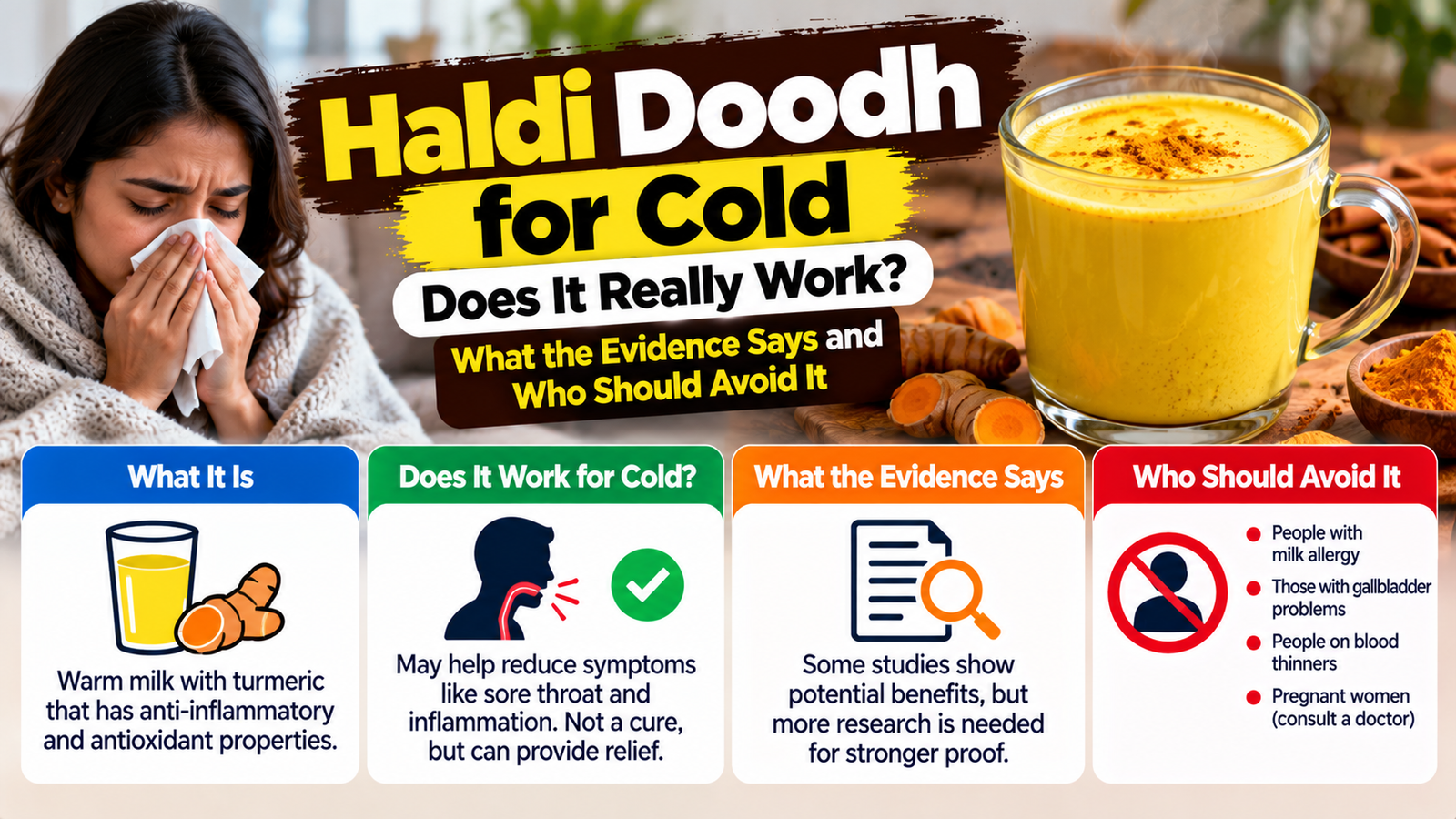
Haldi doodh for cold is one of the most common home remedies in Indian homes, and many websites call it a proven cure. The honest answer is more modest. In the sources we reviewed, we did not find strong evidence that turmeric milk cures a cold. Warm fluids and rest do help you feel more comfortable while your body recovers, and some remedies may soothe symptoms.
This guide looks at haldi doodh for cold, other common desi remedies such as honey and lemon, ginger and steam, what official health sources say, who should be careful and when to see a doctor.
Table of Contents
Quick Answer
- Haldi doodh for cold may soothe a sore throat for some people, but there is no proof that it cures a cold or works instantly.
- A fact-check of ginger and turmeric rated the claim that they instantly cure a cough or cold as mostly false. The doctors quoted said they may ease mild symptoms gradually.
- The NHS says a cough usually clears up on its own within 3 to 4 weeks, and suggests plenty of fluids and hot lemon and honey, which is not suitable for babies under 1 year old.
- NHS 111 Wales notes that there is limited evidence that hot lemon and honey treats a cough, although some people find it soothing.
- Be careful with turmeric or ginger if you take blood thinners or diabetes medicines, or if you have gallbladder problems.
- See a doctor if a cough lasts more than 3 weeks, quickly gets very bad or if you cough up blood.
Desi Remedies: What Helps and What Is a Myth
| Remedy | What the sources say | Who should be careful |
|---|---|---|
| Plenty of warm fluids | The NHS lists drinking plenty of fluids as self-care for a cough | Anyone a doctor has told to limit fluids |
| Hot lemon and honey | The NHS says it has a similar effect to cough medicines, while a later NHS 111 Wales page says evidence is limited but some people find it soothing | Never give honey to babies under 1 year old, and do not give hot drinks to small children |
| Haldi doodh (turmeric milk) | No strong evidence that it cures colds. It may be soothing | People on blood thinners or diabetes medicines, people with gallbladder problems and anyone who cannot take milk |
| Ginger tea | May ease throat discomfort gradually. It is not an instant cure | People on blood thinners |
| Steam inhalation | One fact-check lists it for congestion, but the NHS advises that children should not breathe steam from a bowl of hot water because of the risk of scalding | Children in particular |
| Instant cure claims | Rated mostly false in the fact-check | Nobody should rely on them |
Haldi Doodh for Cold: How to Make It Safely
If you enjoy haldi doodh for cold, make it in a simple way: warm milk, not boiling hot, with a small pinch of turmeric (haldi). Let it cool a little before drinking. Do not give hot drinks to small children, and ask a doctor before giving turmeric milk to a young child. Treat it as a comforting warm drink, not as a treatment.
Who Should Avoid It or Check First
- People who take blood thinners or anti-diabetic medicines, because excess turmeric may be a problem for them.
- People with gallbladder problems, because turmeric may worsen them.
- People who take blood thinners and want to use ginger, because ginger can interact with them.
- Babies under 1 year old, who must not be given honey.
- Anyone who is pregnant, breastfeeding or has a long-term condition and wants to use remedies regularly. Ask your doctor first.
When to See a Doctor
| Situation | What to do |
|---|---|
| A cough lasting more than 3 weeks | See a doctor, as the NHS advises |
| A cough that is very bad or quickly getting worse, such as a hacking cough or not being able to stop coughing | Get urgent medical advice |
| Coughing up blood or blood-stained mucus | See a doctor urgently |
| A chesty cough with green or yellow mucus in people over 65 | See a doctor, as the NHS advises for chest infections |
| High fever, trouble breathing or chest pain | Get medical help promptly |
Common Mistakes With Home Remedies
- Expecting an instant cure. Colds and coughs are often caused by viruses and take time to clear.
- Stopping prescribed medicines because a home remedy seems to work.
- Giving honey to a baby under 1 year old.
- Overusing turmeric or ginger, which may cause heartburn or diarrhoea.
- Ignoring a cough that does not go away.
Final Thoughts on Haldi Doodh for Cold
Haldi doodh for cold is a comforting warm drink, but the evidence that it cures a cold is weak. Use warm fluids, rest and, for adults and children over 1 year, hot lemon and honey if you like it. Check with a doctor if you take medicines or have a health condition, and see a doctor if a cough lasts more than 3 weeks or gets worse.
Frequently Asked Questions
Does haldi doodh cure a cold?
No strong evidence says it does. It may soothe a sore throat, but it is not a cure and does not work instantly.
Is turmeric milk safe for children?
Ask a doctor first. Do not give hot drinks to small children, and never give honey to babies under 1 year old.
Can I drink haldi doodh every day?
This guide did not find evidence on daily use. If you take blood thinners or diabetes medicines, or have gallbladder problems, ask your doctor before using turmeric regularly.
Is honey and lemon better than haldi doodh?
The NHS lists hot lemon and honey as self-care for a cough, and does not list turmeric milk. The evidence for both is limited, so choose what you find soothing and follow the safety advice above.
How long does a cough last?
The NHS says a cough will usually clear up on its own within 3 to 4 weeks. See a doctor if it lasts longer.
Update Log
| Date | Update |
|---|---|
| October 23, 2026 | First version based on NHS cough guidance and a published fact-check |
Sources and Official Links
- NHS 111 Wales: cough
- NI Direct: cough
- NHS 111 Wales: chest infection in adults
- THIP Media: can ginger and turmeric instantly cure a cough and cold?
- Ministry of Health and Family Welfare, India
Related Guides
Season of coughs and colds? See our guides to cold vs flu vs COVID symptoms, how to recover from cold or flu at home and AQI explained.