Last updated: October 2026. This guide is general nutrition information, not medical advice. If you have allergies (especially to nuts, fish or eggs), a medical condition, or take medication, check with your doctor or dietitian before changing your diet or adding supplements.
Introduction: Can Food Really Help Focus and Memory?
Your brain uses a large share of your daily energy, so what you eat can affect how you feel and think. But it is important to be honest about the evidence: no single food or supplement will make you smarter or fix memory problems. The best-supported idea is that an overall eating pattern rich in vegetables, fruit, whole grains, beans, nuts, fish and olive oil is linked with healthier thinking as we age.
This guide gives you a practical brain food list, what the evidence says about each food, easy ways to eat it, a sample day for study or work, and the habits that matter just as much as food: sleep, water and movement.
Quick Answer
- Eat a pattern, not a miracle food. Mediterranean-style and MIND-style diets are the best studied.
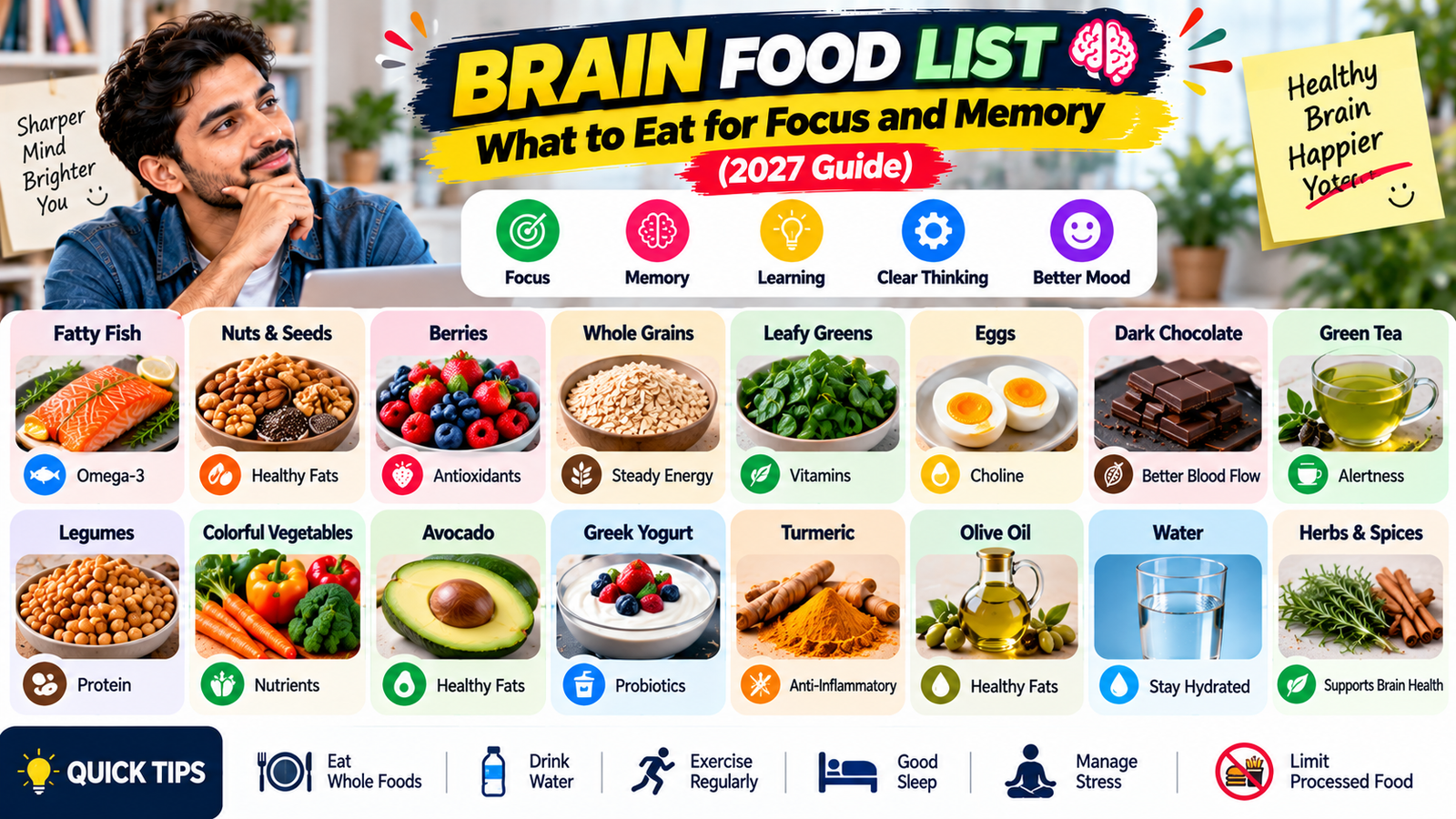
- Include fish, leafy greens, berries, nuts, beans, whole grains, eggs and olive oil regularly.
- Pair carbohydrates with protein or fat for steadier energy during study or work.
- Drink enough water and be careful with caffeine late in the day.
- Do not skip sleep. No food makes up for it.
- Be skeptical of supplements. Evidence for memory pills is weak.
What the Research Can and Cannot Tell Us
Much of the research on food and brain health is observational. It shows that people who eat certain patterns tend to have better cognitive health, but those people may also exercise more, sleep better and smoke less. Some trials add useful evidence, yet results are mixed. For that reason, this guide describes foods as supporting a healthy diet, not as cures.
Two patterns appear often in research. The Mediterranean diet is built around vegetables, fruit, whole grains, beans, nuts, olive oil and fish. The MIND diet blends the Mediterranean approach with a focus on leafy greens and berries, and limits red meat, butter, cheese, sweets and fried food.
The Brain Food List
| Food | Key nutrients | What the evidence suggests | Easy ways to eat it |
|---|---|---|---|
| Fatty fish (salmon, sardines, mackerel) | Omega-3 fats including DHA | Fish intake is linked with better brain health in observational studies; supplement trials are mixed | Grilled fish twice a week, canned sardines on toast |
| Leafy greens (spinach, kale, collards) | Vitamin K, folate, lutein, nitrate | Higher intake is linked with slower cognitive decline in some studies | Add to eggs, soups, smoothies and curries |
| Berries (blueberries, strawberries) | Flavonoids and vitamin C | Small trials suggest benefits for memory in older adults; evidence is still developing | On oats or yogurt, or frozen in smoothies |
| Nuts, especially walnuts | Healthy fats, vitamin E, plant omega-3 (ALA) | Nut eating is linked with better cognition in several studies | A small handful as a snack |
| Eggs | Choline, protein, B vitamins | Choline is needed to make a brain chemical involved in memory; most people eat enough | Boiled eggs, omelets, egg wraps |
| Beans and lentils | Fiber, slow carbohydrates, folate, iron | Steady energy and part of Mediterranean and MIND diets | Soups, salads, curries, hummus |
| Whole grains (oats, brown rice, quinoa) | Fiber and B vitamins | Slower digestion than refined grains, which can mean steadier energy | Porridge, whole-grain bread, grain bowls |
| Olive oil | Monounsaturated fats and polyphenols | Central to the Mediterranean diet, which is linked with healthier cognitive aging | Dress salads, roast vegetables |
| Dark chocolate (70% or higher) | Flavanols and some caffeine | Some small studies suggest short-term benefits; it is also high in calories | One or two squares |
| Coffee and tea | Caffeine, and L-theanine in tea | Caffeine can boost alertness short term; too much can disturb sleep and cause jitters | Morning or early afternoon, in moderation |
Vegetarian and Vegan Options for Omega-3
If you do not eat fish, you can get ALA omega-3 from flaxseed, chia seeds and walnuts. The body converts only a small part of ALA into DHA, so some vegetarians consider an algae-based DHA supplement. Ask your doctor or dietitian whether it is right for you.
Smart Snack Combinations for Study or Work
| Snack | Why it works | Prep time |
|---|---|---|
| Apple slices with peanut butter | Fiber plus protein and fat | 2 minutes |
| Greek yogurt with berries and walnuts | Protein, flavonoids and healthy fats | 3 minutes |
| Hummus with carrot and cucumber sticks | Fiber and plant protein | 5 minutes |
| Boiled egg with whole-grain toast | Protein, choline and slow carbohydrates | 10 minutes |
| Oats with chia seeds and banana | Fiber and plant omega-3 | 5 minutes |
| A small handful of mixed nuts and a piece of fruit | Healthy fats and fiber | 1 minute |
A Sample Day for Focus
| Time | Meal | Example |
|---|---|---|
| Morning | Breakfast | Oats with berries, chia seeds and a spoon of nut butter; tea or coffee |
| Midday | Lunch | Lentil and spinach curry with brown rice and a side salad |
| Afternoon | Snack | Apple with peanut butter or yogurt with walnuts; water |
| Evening | Dinner | Grilled salmon or tofu, roasted vegetables, olive oil dressing |
Prepare the base ingredients in advance. Our guide to high protein vegetarian meal prep shows how to cook a week of meals in about two hours.
Foods and Habits to Limit
- Sugary drinks and sweets can cause quick energy highs followed by crashes in some people.
- Heavy alcohol use is linked with worse brain health and poor sleep.
- Highly processed and fried food in large amounts is linked with poorer diet quality overall.
- Too much caffeine, especially late in the day, can disturb sleep and increase anxiety.
- Skipping meals can leave some people tired and unable to concentrate.
Habits That Matter as Much as Food
| Habit | Why it matters for focus and memory | Simple start |
|---|---|---|
| Sleep | Memory is strengthened during sleep, and short sleep hurts attention | Aim for 7 or more hours for adults; teenagers need more |
| Water | Even mild dehydration can make some people tired and less focused | Keep a bottle at your desk |
| Movement | Regular activity is linked with better mood and thinking | A 20-minute walk before studying or work |
| Breaks | Attention fades after long stretches | Work for 25 to 50 minutes, then rest for 5 to 10 |
| Social contact | Staying mentally and socially active is linked with healthier aging | Weekly time with friends or family |
Myths and Facts
| Myth | Fact |
|---|---|
| Blueberries will boost your exam score | Berries are a healthy choice, but no food gives an instant exam boost. |
| Memory supplements work for everyone | Evidence for most brain supplements is weak, and products are not always well tested. |
| Sugar before an exam improves focus | A small amount of carbohydrate may help some people briefly, but large sugary snacks often lead to a crash. |
| You only use 10 percent of your brain | This is a myth. We use all of our brain. |
| Fasting sharpens the mind for everyone | Responses differ. Some people feel clear, others cannot focus without food. |
Common Mistakes to Avoid
- Chasing a single superfood and ignoring the rest of your diet.
- Replacing meals with coffee.
- Buying expensive supplements instead of improving daily food and sleep.
- Eating a very large meal right before studying, which can make you drowsy.
- Forgetting allergies. Nuts, fish and eggs are common allergens.
Frequently Asked Questions
What is the best food for memory?
There is no single best food. Leafy greens, berries, nuts, fish, beans and olive oil all appear in diets linked with healthier thinking, so variety matters most.
What should I eat before an exam?
Choose a balanced meal one to two hours before, such as eggs with whole-grain toast and fruit, or oats with yogurt and berries. Avoid trying new foods on exam day.
Do omega-3 supplements improve memory?
Results from trials are mixed, and benefits are not clear for healthy adults. Eating fish regularly is a better-supported starting point. Talk to your doctor before taking supplements.
Is coffee good for the brain?
Coffee can improve alertness in the short term. Too much can cause jitters and disturb sleep, so keep it moderate and avoid it late in the day.
Can children use this list?
Yes, as part of a balanced diet. Whole nuts can be a choking risk for young children, so ask your pediatrician about safe forms. For more on homework focus, see our guide to helping your child focus.
Sources and Further Reading
- National Institute on Aging (healthy eating and cognitive health)
- Harvard T.H. Chan School of Public Health: The Nutrition Source
- NHS (Eat well guidance)
Related Guides
Pair your food habits with movement. See our 30 day walking plan for beginners.



Leave a Reply