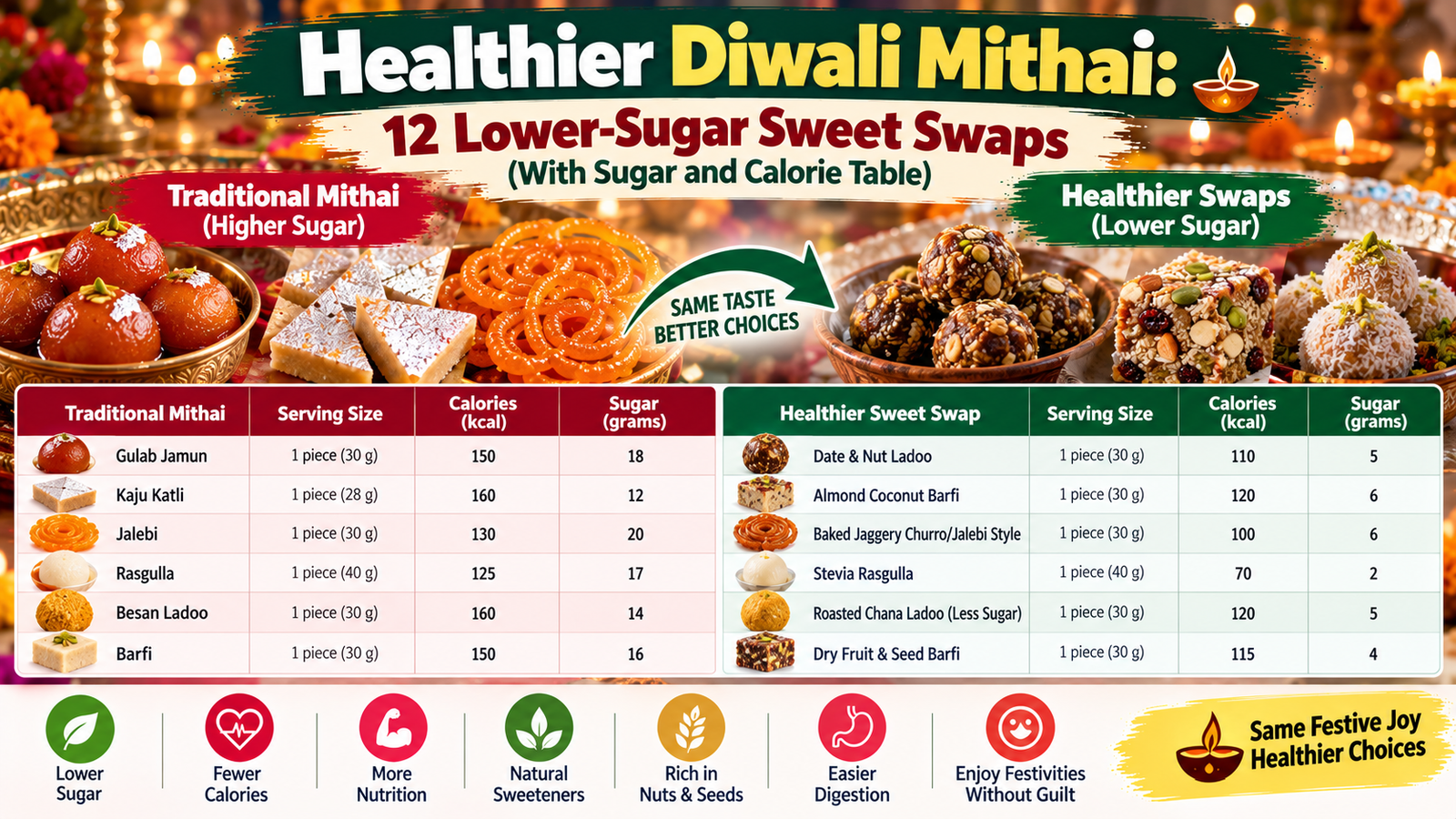
Last updated: October 9, 2026. Calorie and sugar figures are approximate estimates for typical home or shop recipes. They vary a lot with size, recipe and brand, so use them to compare, not as exact values. This guide is general nutrition information, not medical advice. If you have diabetes, prediabetes, a heart or kidney condition, or you are pregnant, ask your doctor or dietitian how sweets fit into your plan.
Introduction: Enjoy Diwali Without the Sugar Overload
Diwali in 2026 falls on Sunday, 8 November (with Choti Diwali on 7 November, though dates can vary slightly by region). For many families, the festival means days of sweets: boxes of mithai from friends, homemade ladoos, and second helpings of kheer. You do not have to skip any of it. A few smart swaps, smaller pieces and better timing can cut the sugar a lot while keeping the festival feeling.
This guide gives you 12 lower-sugar swaps with an approximate sugar and calorie table, two easy recipes, tips for hosting and gifting, and honest notes about what jaggery, dates and ‘sugar-free’ sweets really mean for your sugar intake.
Quick Answer
- Pick smaller pieces. Halving a gulab jamun halves the sugar, and nobody misses it.
- Cut the sugar in recipes by 25 to 50 percent and add cardamom, saffron, cinnamon or nutmeg for flavor.
- Choose nut, seed, paneer and fruit-based sweets over syrup-soaked ones.
- Eat sweets after a meal, not on an empty stomach, and take a 10 to 15 minute walk afterwards.
- Remember that jaggery, honey and dates are still sugar. They bring some minerals and fiber, but they raise blood sugar too.
How Much Sugar Is Too Much?
The World Health Organization suggests keeping free sugars (added sugars plus sugars in honey, syrups and fruit juice) to less than 10 percent of daily calories, and says going below 5 percent, about 25 grams or roughly 6 teaspoons a day for an adult eating 2,000 calories, gives extra benefits. The American Heart Association suggests no more than about 25 grams a day for most women and 36 grams for most men. Sugar in whole fruit and plain milk is not counted in these limits.
One traditional gulab jamun or motichoor ladoo can contain 15 to 20 grams of sugar on its own. That means a couple of pieces can use up an entire day’s suggested amount.
Traditional Mithai: What Is in One Piece?
| Sweet | Typical piece | Approximate calories | Approximate sugar |
|---|---|---|---|
| Gulab jamun | 1 medium (about 40 g) | About 150 | 15 to 20 g |
| Jalebi | 1 piece (about 30 g) | About 130 | 12 to 15 g |
| Kaju katli | 1 piece (about 20 g) | 90 to 100 | 8 to 10 g |
| Besan ladoo | 1 (about 40 g) | 180 to 200 | 12 to 16 g |
| Motichoor ladoo | 1 (about 40 g) | 180 to 200 | 16 to 20 g |
| Rasgulla | 1 (about 40 g, with syrup) | 100 to 120 | 10 to 14 g |
| Soan papdi | 1 cube (about 25 g) | 120 to 130 | 11 to 14 g |
| Milk barfi | 1 (about 30 g) | 120 to 140 | 12 to 15 g |
| Peda | 1 (about 25 g) | 90 to 110 | 9 to 12 g |
| Kheer | 1/2 cup | 150 to 200 | 12 to 18 g |
| Gajar halwa | 1/2 cup | 180 to 250 | 15 to 22 g |
| Rasmalai | 1 piece (about 60 g) | 150 to 190 | 14 to 18 g |
12 Lower-Sugar Swaps (With Sugar and Calorie Table)
Each swap below keeps the spirit of the sweet while reducing sugar through a smaller size, less sweetener or a different base ingredient. Numbers are approximate.
| # | Traditional sweet (1 piece) | Approx. calories and sugar | Lower-sugar swap | Approx. calories and sugar |
|---|---|---|---|---|
| 1 | Gulab jamun | About 150 kcal, 15 to 20 g | Half-size gulab jamun with the syrup drained | About 75 kcal, 7 to 10 g |
| 2 | Kaju katli | 90 to 100 kcal, 8 to 10 g | Mini almond-pistachio barfi (15 g) sweetened with a little date paste | 75 to 85 kcal, 4 to 6 g |
| 3 | Besan ladoo | 180 to 200 kcal, 12 to 16 g | Smaller besan ladoo (25 g) made with half the sugar | 110 to 120 kcal, 5 to 7 g |
| 4 | Motichoor ladoo | 180 to 200 kcal, 16 to 20 g | Ragi (finger millet) and nut ladoo with a little jaggery (25 g) | 100 to 110 kcal, 6 to 8 g |
| 5 | Jalebi | About 130 kcal, 12 to 15 g | Small bowl of fruit with cinnamon and thick yogurt | 80 to 100 kcal, 8 to 12 g (natural sugars) |
| 6 | Rasgulla | 100 to 120 kcal, 10 to 14 g | Fresh paneer sandesh with about a third of the sugar | 70 to 80 kcal, 4 to 6 g |
| 7 | Soan papdi | 120 to 130 kcal, 11 to 14 g | Roasted chana and nut chikki with a little jaggery (20 g) | 95 to 105 kcal, 6 to 8 g |
| 8 | Milk barfi | 120 to 140 kcal, 12 to 15 g | Coconut-date ladoo (25 g) | 85 to 95 kcal, 7 to 9 g |
| 9 | Peda | 90 to 110 kcal, 9 to 12 g | Square of dark chocolate (70 percent or higher, 10 g) with an almond | 55 to 65 kcal, 2 to 3 g |
| 10 | Kheer (1/2 cup) | 150 to 200 kcal, 12 to 18 g | Kheer with half the sugar and extra nuts (1/3 cup) | 110 to 130 kcal, 6 to 8 g |
| 11 | Gajar halwa (1/2 cup) | 180 to 250 kcal, 15 to 22 g | Gajar halwa that relies on the sweetness of carrots and reduced milk (1/3 cup) | 130 to 160 kcal, 8 to 12 g |
| 12 | Rasmalai | 150 to 190 kcal, 14 to 18 g | Fruit shrikhand with no added sugar (1/3 cup) | 80 to 100 kcal, 6 to 9 g |
Is Jaggery, Honey or Date Sweetening Really Healthier?
| Sweetener | What it offers | What to remember |
|---|---|---|
| White sugar | Sweetness only | Counts fully as added sugar |
| Jaggery | Small amounts of minerals such as iron and potassium | Still mostly sugar; raises blood sugar; use less, not more |
| Honey | Some antioxidants | Counts as free sugar; not for babies under 12 months |
| Dates and other dried fruit | Fiber and some minerals | Very concentrated in sugar and calories; watch portions |
| Sugar-free sweets made with sugar alcohols | Fewer digestible sugars | Can cause bloating or diarrhea; can still be high in calories; not a free pass |
| Artificial sweeteners | No sugar or calories | Not a magic fix; taste preference can stay sweet; ask your doctor if you have a condition |
The healthiest approach is to reduce total sweetness and portion size, not to swap one sweetener for another and eat more.
Easy Recipe 1: Date and Nut Ladoo (No Added Sugar)
These ladoos use only dates for sweetness. They are lower in added sugar than traditional ladoos, but the dates still supply natural sugar, so enjoy one at a time.
| Ingredient | Amount |
|---|---|
| Pitted dates (soft) | 200 g |
| Mixed nuts (almonds, cashews, walnuts), roughly chopped | 100 g |
| Ghee (optional) | 1 teaspoon |
| Cardamom powder | 1/2 teaspoon |
| Desiccated coconut for rolling (optional) | 2 tablespoons |
- Dry-roast the nuts in a pan for 3 to 4 minutes until fragrant, then let them cool.
- Warm the dates with the ghee for 2 minutes until soft, then mash into a paste.
- Mix in the nuts and cardamom.
- Roll into 12 small ladoos and coat with coconut if you like.
- Store in an airtight container in a cool place for up to a week, or in the fridge for longer.
Approximate nutrition per ladoo (12 made): about 95 calories and about 10 g of natural sugar, with some fiber and healthy fats.
Easy Recipe 2: Lighter Fresh Paneer Sandesh
| Ingredient | Amount |
|---|---|
| Fresh paneer, crumbled (or chhena) | 200 g |
| Sugar or powdered jaggery | 1 to 2 tablespoons (instead of the usual larger amount) |
| Cardamom powder | 1/4 teaspoon |
| Chopped pistachios for topping | 1 tablespoon |
- Knead the paneer with your palm for 5 minutes until smooth.
- Add the sweetener and cardamom and knead again.
- Cook on low heat for 3 to 4 minutes, stirring, until it comes together.
- Cool slightly, shape into 10 to 12 small pieces and press a pistachio on top.
- Refrigerate and eat within 2 days.
Smart Ways to Cut Sugar in Any Recipe
- Reduce sugar by a quarter to a half. Most recipes still taste good, especially with warming spices.
- Use flavor, not sweetness: cardamom, saffron, cinnamon, nutmeg, rose water and vanilla add a sense of richness.
- Roast nuts and seeds to bring out natural sweetness and crunch.
- Use ripe fruit in halwa, shrikhand and kheer.
- Make smaller pieces, with smaller moulds and spoons.
- Add protein and fiber with nuts, paneer, yogurt, oats and millets to slow the sugar rise.
- Go lighter on syrup. Drain gulab jamun and rasgulla before serving.
How to Eat Sweets During the Festival
| Tip | Why it helps |
|---|---|
| Eat sweets after a meal, not on an empty stomach | A meal with protein, fiber and vegetables slows the rise in blood sugar |
| Take a 10 to 15 minute walk after eating | Light activity after meals helps your body use glucose |
| Use a small plate | Smaller servings look more satisfying |
| Have one piece, then wait 15 minutes | Gives your brain time to notice fullness |
| Drink water and unsweetened tea | Thirst can feel like hunger |
| Keep dry fruits and fresh fruit visible | Makes the easy choice the healthier choice |
| Sleep well | Poor sleep increases cravings |
For more on steadier energy, read our guide to metabolic health for beginners, and start a gentle routine with our 30 day walking plan.
Hosting and Gifting Tips
| Situation | Idea |
|---|---|
| Hosting guests | Plan 2 to 3 small pieces per person, not a large plate. Offer fruit, nuts and a lower-sugar option beside the mithai. |
| Giving gifts | Choose a mix of unsalted nuts, seeds, dried figs and a few small sweets instead of a big box of syrup-based mithai. |
| Receiving boxes of sweets | Freeze extras in small portions and enjoy them slowly after the festival. |
| Office or community events | Offer fruit and roasted snacks alongside sweets. |
| Children | Offer small portions and avoid using sweets as rewards. |
If You Have Diabetes or Prediabetes
- Ask your doctor or dietitian how many carbohydrates you can have in a meal, and plan sweets within that.
- Check your blood sugar as your care team advises, and do not skip prescribed medicines.
- Do not assume ‘sugar-free’ or ‘jaggery-based’ sweets are safe in any amount.
- Pair a small sweet with a balanced meal, and take a short walk afterwards.
- Seek medical advice if your readings are persistently high or you feel unwell.
Common Mistakes to Avoid
- Saving up and then eating many sweets at once.
- Eating sweets on an empty stomach.
- Switching to jaggery or honey and eating larger portions.
- Relying on ‘sugar-free’ labels without checking calories and sugar alcohols.
- Forgetting sweet drinks, such as sodas and sweetened lassi, which add sugar too.
- Skipping meals to ‘save room’ for sweets.
Frequently Asked Questions
Are jaggery sweets healthier than sugar sweets?
Jaggery contains small amounts of minerals, but it is mostly sugar and affects blood sugar in a similar way. Use less of it instead of eating more.
How many sweets can I eat during Diwali?
There is no single number. Many people do well with one or two small pieces a day after a meal. If you have diabetes, ask your care team.
Are dates a good substitute for sugar?
They add fiber and minerals, but they are rich in natural sugar and calories. Smaller portions still matter.
Can I make mithai ahead of time?
Yes. Date ladoos, nut ladoos and chikki keep well for days. Paneer and milk-based sweets should be refrigerated and eaten quickly.
What is a healthier gift than a box of mithai?
Unsalted nuts, dried figs, roasted seeds, or a small box with a few mini sweets and fruit.
Sources and Further Reading
- World Health Organization: Healthy diet and sugars
- American Heart Association: Added sugars
- National Institute of Nutrition (ICMR): Dietary guidelines for Indians
- Harvard T.H. Chan School of Public Health: The Nutrition Source
Related Guides
Planning festive meals? See how much protein you need and our high protein vegetarian meal prep.


Leave a Reply