Last updated: October 2026. This is practical styling guidance, not a fixed rule. Prices are rough estimates in US dollars and vary by country, store and quality. Adjust everything to your climate, job, culture and personal style.
Introduction: What a Capsule Wardrobe Is and Why People Use One
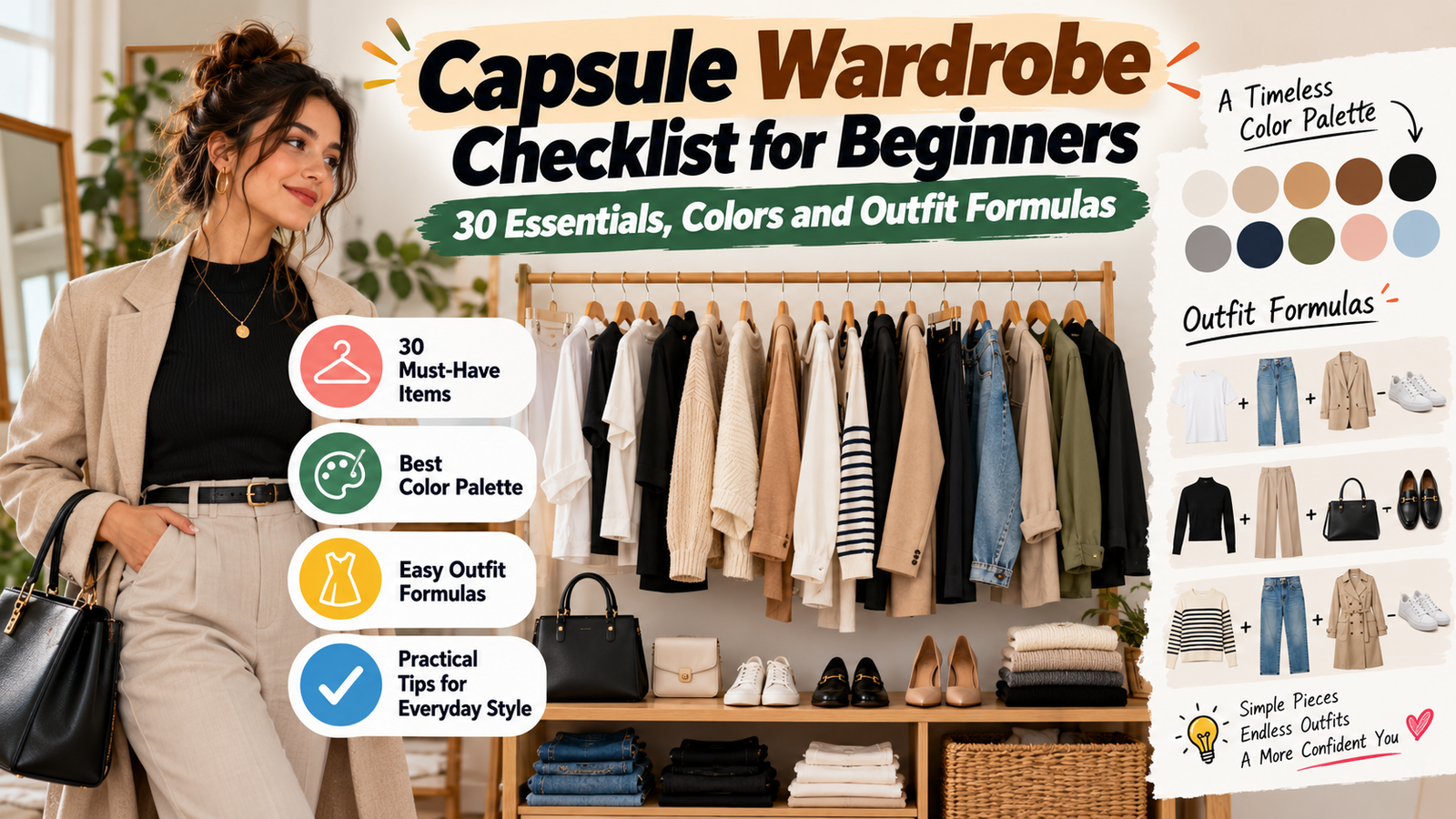
A capsule wardrobe is a small set of clothes that all work together, so most tops go with most bottoms and most outfits take a minute to put on. There is no official size. A common starting point is about 25 to 40 pieces, not counting underwear, sleepwear, workout clothes and special-occasion items.
People use capsule wardrobes to make mornings easier, spend less on clothes they rarely wear and keep their closet manageable. This guide gives you a 30-piece checklist, a color plan, 10 outfit formulas, a simple cost-per-wear method and a one-hour closet audit.
Quick Answer
- Start with 25 to 35 pieces and adjust after a month.
- Choose two or three base colors you can mix freely, plus one or two accent colors.
- Buy versatile basics first: well-fitting jeans, a white shirt, a neutral sweater, a jacket and comfortable shoes.
- Every item should go with at least three other items you already own.
- Audit before you buy. Many people already own half of what they need.
Before You Start: Four Questions to Answer
- What does your week look like? List how many days you dress for work or school, casual time, and events.
- What is your climate? A wardrobe for four seasons needs more layers than one for a warm climate.
- What is your budget? Decide a total for the first three months, so you do not buy everything at once.
- What do you feel good in? Comfort and fit matter more than trends. If you never wear it, it does not belong.
Use your answer to the first question to plan how many pieces go to each part of your life. Here is an example split:
| Part of life | Share of your week (example) | What the clothes need to do |
|---|---|---|
| Work or school | 50% | Look tidy, be comfortable all day, mix easily |
| Casual and weekends | 40% | Be relaxed, easy to wash, comfortable for walking |
| Events and dinners | 10% | One or two pieces that can be dressed up with accessories |
The 30-Essentials Checklist
Use this as a starting template and swap items to match your life. If you wear dresses every day, buy fewer trousers. If you work in a casual setting, skip the blazer.
| Category | What to include | Why it earns a place | Budget option |
|---|---|---|---|
| Tops (7) | 3 plain tees, 1 white button-up shirt, 2 knit sweaters, 1 long-sleeve or striped top | They layer with everything and are easy to wash | Basic multipacks of tees, second-hand sweaters |
| Bottoms (5) | Dark jeans, light jeans, chinos or casual trousers, tailored trousers, 1 skirt or shorts | Jeans and trousers cover most situations; fit matters most here | Thrift jeans; buy one good pair of tailored trousers |
| Dresses (2) | 1 everyday dress, 1 dressier dress or jumpsuit | Complete outfits with no planning | Simple cuts that you can accessorize |
| Layers (4) | Denim or casual jacket, blazer or cardigan, light coat, warm coat | Layers extend each outfit across seasons | Buy the warm coat in end-of-season sales |
| Shoes (5) | White sneakers, walking shoes, boots, loafers or flats, sandals | Comfortable shoes decide how much you wear an outfit | Wear one pair in store for 10 minutes before buying |
| Accessories (4) | Belt, scarf, everyday bag, small evening bag | Change the look of the same outfit | Second-hand bags, a scarf you already own |
| Flex pieces (3) | 1 statement piece, 1 seasonal item, 1 event outfit item | Keeps the wardrobe from feeling boring | Rent or borrow for rare events |
Choosing Your Colors
Color is what makes a small wardrobe work. If most pieces share a base palette, almost everything matches. The split below is a common rule of thumb, not a strict rule.
| Role | Example colors | Rough share of the wardrobe |
|---|---|---|
| Base neutrals | Black, navy, grey, white, beige or camel | 60 to 70% |
| Supporting colors | Denim blue, olive, burgundy, forest green | 20 to 30% |
| Accent colors | Rust, mustard, soft pink, bright blue | About 10% |
How to pick your palette: look at the clothes you already wear most. Hold fabrics up near your face in daylight and choose colors that make you feel good. If you are unsure, start with navy or black, grey and white, then add one accent.
10 Outfit Formulas to Get You Started
- Everyday casual: plain tee, dark jeans, white sneakers, denim jacket.
- Smart casual: white button-up shirt, chinos, loafers, belt.
- Cozy day: knit sweater, light jeans, walking shoes, scarf.
- Office: tailored trousers, plain tee, blazer, flats or loafers.
- Dinner out: dressier dress, boots, light coat, small bag.
- Layered look: long-sleeve tee, cardigan, dark jeans, boots.
- Weekend walk: striped top, shorts or skirt, sneakers, everyday bag.
- Cold weather: knit sweater, trousers, warm coat, boots, scarf.
- Dress-up for less: everyday dress, blazer, belt, loafers.
- Statement piece day: keep everything else neutral and let one item stand out.
How to Audit Your Closet in One Hour
- Take everything out and put it on the bed so you see how much you own.
- Sort into four piles: keep, maybe, donate or sell, and repair.
- Try on the maybe pile. Keep it only if it fits now and feels good.
- Put the keep pile back by type and color. This shows what you have too many of.
- Turn all hangers backwards. When you wear something, turn the hanger the right way. After three months, consider donating what is still backwards.
- Write down the gaps on your checklist before you buy anything.
Cost Per Wear: A Simple Way to Spend Better
Cost per wear is the price divided by the number of times you wear something. It helps you see that a cheap item you rarely wear can cost more per wear than a pricier item you wear all the time. The numbers below are a hypothetical example.
| Item | Price | Times worn | Cost per wear |
|---|---|---|---|
| Well-fitting jeans | $60 | 150 | $0.40 |
| Trendy top worn three times | $25 | 3 | $8.33 |
| Winter coat worn for five winters | $120 | 200 | $0.60 |
| Cheap shoes that hurt | $30 | 20 | $1.50 |
Building a Capsule Wardrobe on a Budget
- Buy in this order: shoes and jeans first, then outerwear, then tops, then accessories.
- Shop second-hand first for jackets, knitwear and bags. Check seams, zips and fabric before buying.
- Buy at the end of a season for items you can use next year, such as coats.
- Read the fabric label. Natural fibres and good blends often last longer, but fit and care matter as much.
- Wait 48 hours before buying anything that is not on your checklist.
- Buy one thing at a time. You will see what works before you buy more.
Seasonal Rotation
| Season | Swap in | Keep all year |
|---|---|---|
| Spring and autumn | Light coat, cardigans, long-sleeve tees, boots or loafers | Jeans, plain tees, white shirt, sneakers |
| Summer | Shorts, skirts, sandals, light dress, sunglasses | Jeans, plain tees, white shirt, sneakers |
| Winter | Warm coat, knit sweaters, scarf, boots | Jeans, plain tees, white shirt, sneakers |
Store the out-of-season items in a box or on a high shelf. This keeps your closet small and your choices easy.
Common Mistakes to Avoid
- Buying a perfect capsule all at once instead of building slowly.
- Choosing colors you think look good but do not feel good in.
- Throwing out clothes you still wear just to hit a number.
- Ignoring fit. A well-fitted cheap item often looks better than a poorly fitted expensive one.
- Forgetting shoes and outerwear, which affect how often you use everything else.
- Copying someone else’s capsule. Your life, climate and style are different.
Frequently Asked Questions
How many pieces should a capsule wardrobe have?
There is no fixed number. Many people start with 25 to 40 pieces. Adjust it after a month based on what you actually wear.
Do I have to throw out my other clothes?
No. You can store clothes you are unsure about for a few months. If you do not miss them, donate or sell them.
Will I get bored of wearing the same clothes?
Many people find they enjoy it because they have fewer choices to make. Accessories, layers and one or two flex pieces keep outfits fresh.
Does this work for different body types and styles?
Yes. The method is about choosing clothes that fit you, suit your life and work together. Focus on fit and comfort first.
What if I need formal wear?
Use your flex pieces or rent or borrow an outfit for rare events. Buying a rarely worn item at full price is often not worth it.
About This Guide
This guide is based on common wardrobe-planning practice, not a single study, so adapt it to your needs. Prices and item counts are examples to help you plan.
Related Guides
Spending less on clothes can free up money for a new interest. See our guide to 20 cheap hobbies you can start at home.




Leave a Reply