Last updated: October 9, 2026. This guide explains the framework as reported by banks and news outlets. Details, exemptions and categories can be clarified or changed, so confirm with NPCI, the Ministry of Finance or your bank. It is general information, not financial advice.
Introduction: Is UPI Free Now?
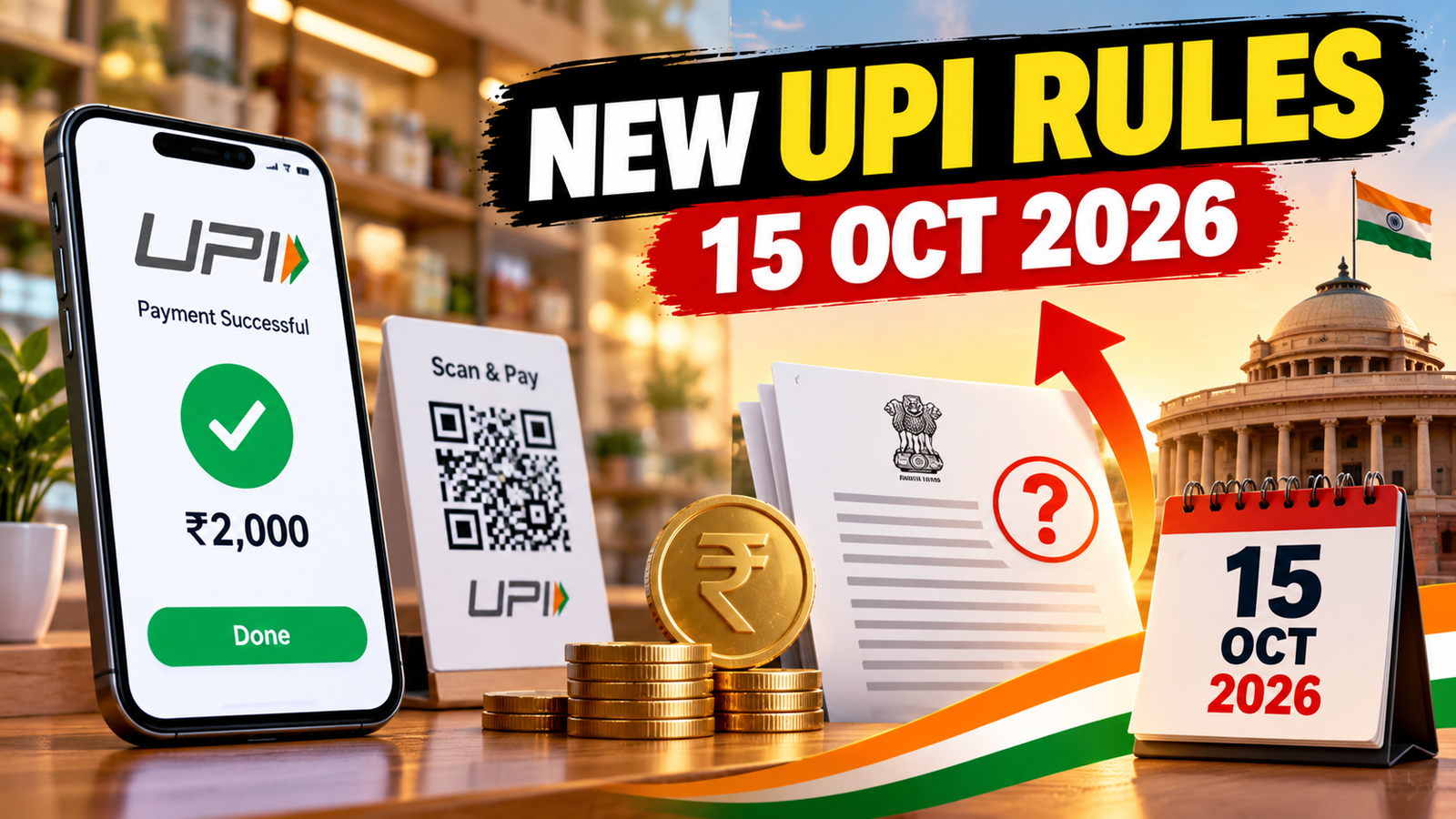
Headlines about ‘UPI charges from 15 October 2026’ have worried many users. The short answer for most people is no, you will not pay a new fee to send or receive money on UPI. What is changing is a Merchant Discount Rate (MDR), a fee that applies to the shop or business on certain merchant payments, not to you as the customer.
This guide explains what changes from 15 October, which payments are affected, worked examples with rupee amounts, who pays, and what to do if a merchant asks you for an extra UPI charge.
Quick Answer
- Person-to-person (P2P) UPI transfers stay free, whatever the amount.
- Customers are not charged the MDR. It is deducted from the merchant’s settlement.
- From 15 October 2026, a 0.4% MDR applies to selected person-to-merchant (P2M) payments above ₹2,000, capped at ₹300 per transaction.
- A flat ₹5 MDR is reported for some categories such as railways, telecom, insurance and fuel above ₹2,000.
- Small merchants and recurring UPI AutoPay payments are reported to be exempt.
- Merchants are not allowed to pass the fee on to you as a separate UPI charge.
What Is MDR?
MDR stands for Merchant Discount Rate. It is the fee a business pays to the banks and payment companies that process a digital payment. Card payments have long carried MDR. UPI merchant payments have largely been zero-MDR since 2020, which is why this change is being discussed so widely.
What Changes From 15 October 2026
| Type of UPI payment | New MDR | Who pays | What it means for you |
|---|---|---|---|
| Person-to-person transfers (friends, family) | None | Nobody | Still free, whatever the amount |
| Merchant payments up to ₹2,000 | None under the new standard MDR | Nobody | No change |
| Selected merchant payments above ₹2,000 | 0.4%, capped at ₹300 | Merchant | No fee for you; the shop pays |
| Selected categories above ₹2,000 (reported: railways, telecom, insurance, fuel) | Flat ₹5 | Merchant | No fee for you |
| Small merchants (reported: up to ₹1 lakh a month through UPI QR) | None | Nobody | No change |
| UPI AutoPay (recurring payments) | Reported to be exempt | Nobody | No change |
Worked Examples
These examples show how the merchant fee works. The customer pays only the bill amount.
| Payment | Calculation | Merchant pays | You pay |
|---|---|---|---|
| ₹150 for tea at a roadside stall | Under ₹2,000, no MDR | ₹0 | ₹150 |
| ₹1,999 at a clothing shop | Under ₹2,000, no MDR | ₹0 | ₹1,999 |
| ₹3,000 at an electronics store (eligible merchant) | 0.4% of 3,000 | ₹12 | ₹3,000 |
| ₹10,000 at a furniture store (eligible merchant) | 0.4% of 10,000 | ₹40 | ₹10,000 |
| ₹1,00,000 at a jewelry shop (eligible merchant) | 0.4% would be ₹400, but the cap is ₹300 | ₹300 | ₹1,00,000 |
| ₹2,500 railway ticket (flat-fee category) | Flat ₹5 | ₹5 | ₹2,500 |
| ₹50,000 sent to a family member (P2P) | Not a merchant payment | ₹0 | ₹50,000 |
Whether a particular merchant or category is covered depends on the final rules and how your bank or payment provider applies them. If you are unsure, ask the merchant or check your bank’s notice.
Who Is Affected?
| Group | Impact | What to do |
|---|---|---|
| Everyday customers | No direct fee | Keep paying as usual; check bills for extra charges |
| Small shopkeepers | Likely exempt below the reported limit | Check your monthly UPI QR volume and your bank’s notice |
| Medium and large merchants | New cost on higher-value payments | Review pricing; do not add a separate UPI surcharge to customers |
| Online and business payments | May be affected depending on the category | Check your payment provider’s update |
| Anyone paying a bill, ticket or insurance premium | No fee for you; the biller may pay a flat ₹5 | Keep your receipt |
Will Shops Ask for Cash Instead?
Some analysts have warned that merchants who face the new charge may prefer cash or offer a cash discount for large payments. That is a business choice, not a rule. Customers should know that the rules say a merchant should not add a separate fee for paying through UPI.
What If a Shop Charges You a UPI Fee?
- Ask for the reason and for a written bill showing the charge.
- Do not pay an extra UPI charge if the shop calls it a UPI fee. Offer another payment method if you prefer.
- Keep a screenshot of the payment and the bill.
- Complain to your bank or UPI app using the complaint option in the app.
- Escalate to NPCI through its UPI dispute and grievance options if the problem continues.
Our guide to UPI payment failed but money deducted explains the complaint steps and escalation levels in detail.
Practical Tips for Customers
- Keep using UPI as before. For P2P and normal shop payments, nothing changes for you.
- For big purchases, ask the shop whether there is any extra charge before you pay.
- Save bills and transaction screenshots for large payments.
- Avoid clicking messages that say UPI is now chargeable. Scammers use news like this to send fake links.
- Never share your UPI PIN. It is needed only to send money, never to receive it.
Common Myths
| Myth | Fact |
|---|---|
| Every UPI payment will now cost 0.4% | The MDR applies to selected merchant payments above ₹2,000, and the merchant pays it |
| Sending money to friends will be charged | P2P transfers remain free |
| UPI apps can add a platform fee | Reports say apps are prohibited from imposing platform fees or hidden charges on users |
| All shops will pay the fee | Small merchants and some payment types are reported to be exempt |
| UPI is no longer free | UPI remains free for customers; the change is on the merchant side |
Frequently Asked Questions
Is UPI free from 15 October 2026?
For customers, yes. P2P and normal merchant payments do not carry a user fee. Selected merchant payments above ₹2,000 carry an MDR that the merchant pays.
What is the maximum MDR on a UPI payment?
Reports say the 0.4% MDR is capped at ₹300 per transaction.
Does the new MDR apply to UPI AutoPay or subscriptions?
Recurring payments through UPI AutoPay are reported to be exempt.
Can a shop charge me for paying by UPI?
Merchants are not permitted to add the MDR to your bill as a separate UPI charge. If it happens, complain to your bank or UPI app and NPCI.
Will UPI limits change?
This guide covers the MDR change. UPI limits can vary by bank, app and payment type, so check your bank for your own limit.
Sources and Official Links
Related Guides
Also read: UPI payment failed but money deducted: refund steps and timelines.



Leave a Reply