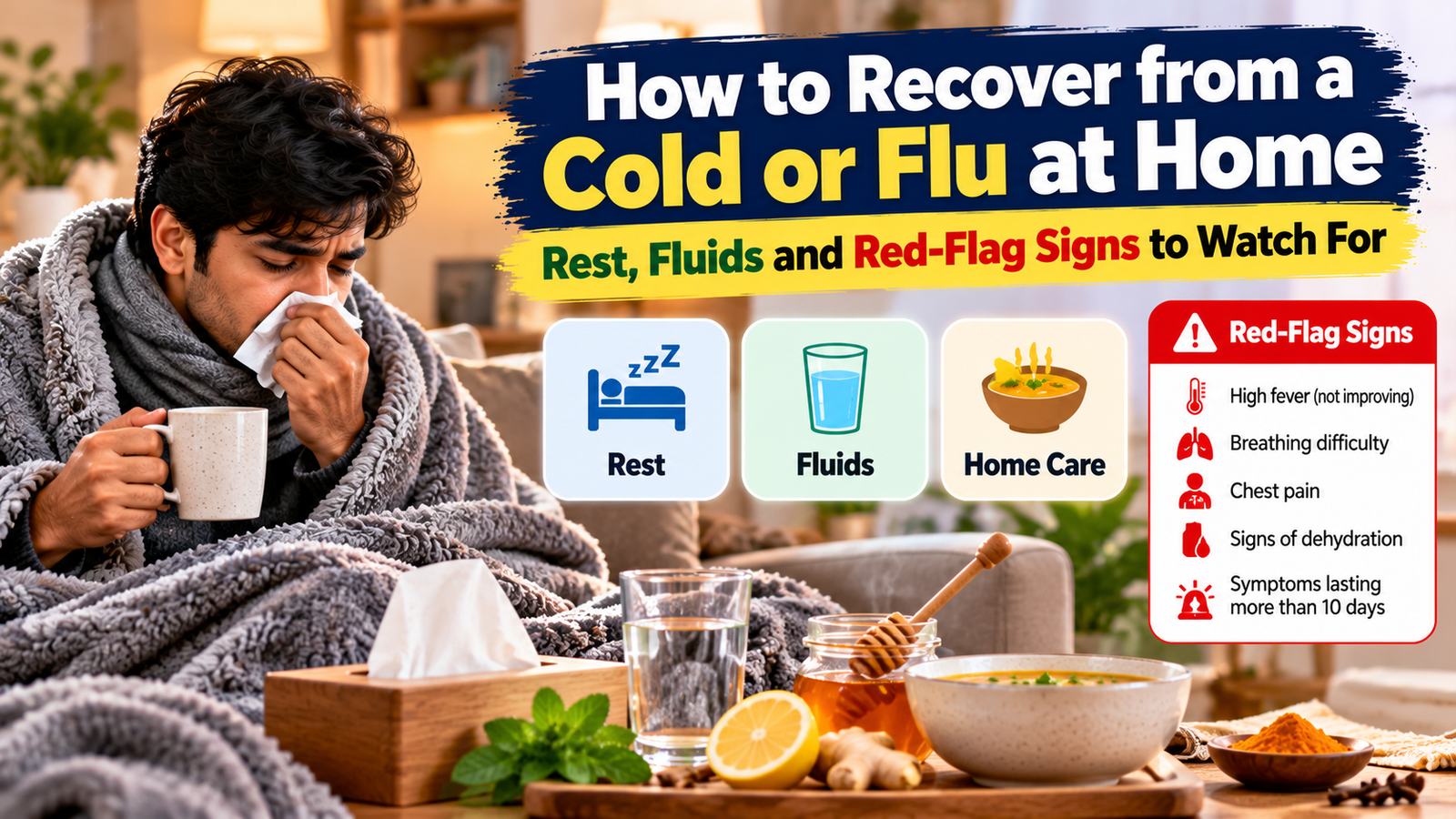
Last updated: October 9, 2026. This guide is general health information, not medical advice. It is meant for generally healthy adults and older children with mild illness. Babies, pregnant people, older adults, and anyone with a chronic condition or weakened immune system should contact a doctor early. In an emergency, call your local emergency number.
Introduction: What Actually Helps You Recover?
Most colds and many cases of flu get better at home with rest, fluids and time. There is no pill that cures a cold, and antibiotics do not work because these illnesses are caused by viruses. What you can do is support your body, relieve symptoms safely, protect other people and watch for signs that you need a doctor.
This guide gives you a day-by-day recovery plan, a table of common symptoms and safe relief options, advice on food and drink, a list of medicine safety tips, and a clear list of red-flag signs.
Quick Answer
- Rest. Your body needs energy to fight infection. Sleep more and cut back on activity.
- Drink fluids often: water, soup, herbal tea or oral rehydration drinks.
- Treat symptoms carefully with the right medicine for you, following the label.
- Stay home while you are unwell, so you do not spread it.
- Watch for red flags such as trouble breathing, chest pain, confusion or dehydration.
- Contact a doctor early if you are in a high-risk group, because flu antivirals work best in the first 48 hours.
How Long Does Recovery Take?
| Illness | Typical length | Cough or tiredness can linger |
|---|---|---|
| Common cold | About 7 to 10 days | Cough can last up to 2 to 3 weeks |
| Flu | About 3 to 7 days of main symptoms | Cough and tiredness for 1 to 2 weeks or more |
| COVID-19 | Often 1 to 2 weeks | Cough or fatigue can last longer |
If you are not improving after several days, are getting worse, or have symptoms that return after improving, see a doctor.
A Day-by-Day Recovery Plan
| Day | What to focus on | Tips |
|---|---|---|
| Days 1 to 2 | Rest and hydration | Cancel plans, sleep as much as you can, drink often, and eat small meals if you have little appetite |
| Days 3 to 4 | Symptom relief and monitoring | Use steam, saline spray or warm drinks as needed. Check your temperature and note any worsening. |
| Days 5 to 7 | Gradual improvement | Keep resting. Light walking is fine if you feel better, but stop if you become breathless or dizzy. |
| Days 8 to 14 | Returning to normal | Ease back into work and exercise. A lingering cough and tiredness can be normal. |
Rest and Sleep
- Sleep more than usual. Naps are fine.
- Raise your head with an extra pillow to ease congestion and cough at night.
- Skip hard workouts while you have a fever, body aches or a chest cough.
- Return to exercise slowly once the fever has gone and you feel better.
Fluids: What to Drink and How Much
Fever, sweating and a runny nose all cause fluid loss. Drinking helps thin mucus and prevents dehydration. There is no magic number, but aim to sip steadily through the day and check your urine color: pale yellow usually means you are drinking enough.
| Drink | Why it helps | Notes |
|---|---|---|
| Water | Hydrates and thins mucus | Keep a bottle nearby |
| Warm soup or broth | Gives fluid, salt and a little nutrition | Easy if you have little appetite |
| Herbal tea or warm water with lemon | Soothes the throat | Avoid very hot drinks |
| Honey in warm water or tea | May ease cough in adults and children over 1 year | Never give honey to babies under 12 months |
| Oral rehydration drinks | Replace fluid and salts if you have vomiting, diarrhea or heavy sweating | Useful if you cannot eat much |
| Fruit juice or sports drinks | Provide fluid and sugar | Dilute them if they upset your stomach |
Limit alcohol, which can make dehydration and poor sleep worse.
Food: What to Eat When You Feel Unwell
- Do not force large meals. Small, regular meals are fine.
- Choose easy foods: soup, rice, toast, bananas, oats, yogurt, eggs, cooked vegetables.
- Include some protein to support recovery, such as eggs, lentils, yogurt or chicken.
- Avoid heavy, greasy or very spicy food if your stomach is upset.
- Vitamin and mineral supplements are not needed if you eat normally, and evidence that vitamin C or zinc speeds recovery is limited or mixed.
The old saying ‘feed a cold, starve a fever’ is not supported by evidence. Eat when you are hungry and keep drinking either way.
Symptom Relief: What May Help
| Symptom | Options that may help | Be careful with |
|---|---|---|
| Blocked or runny nose | Saline nasal spray or rinse, steam from a hot shower, extra pillows | Decongestant sprays used for more than a few days can cause rebound congestion |
| Sore throat | Warm drinks, honey in tea (not for babies), gargling with warm salt water | Lozenges are a choking risk for young children |
| Cough | Honey, warm fluids, a humidifier, sleeping with your head raised | Cough medicines are not recommended for young children; ask a pharmacist or doctor |
| Fever, aches and headache | Rest, fluids and over-the-counter pain relievers used as directed on the label | Do not give aspirin to children or teenagers. Check doses for children by weight with a doctor or pharmacist. |
| Chest tightness or wheeze | Rest and warm fluids | This can be serious. Seek medical advice. |
| Poor appetite | Small meals and fluids | Dehydration is the bigger risk than skipping a meal |
Medicine Safety Tips
- Read the label and follow the dose and timing exactly.
- Avoid doubling up. Many cold and flu products already contain paracetamol (acetaminophen) or similar ingredients. Taking several products can lead to an overdose.
- Check with a pharmacist or doctor if you take other medicines, are pregnant, or have conditions such as liver, kidney, heart or stomach problems.
- Do not give aspirin to children or teenagers with a viral illness.
- Do not give cough and cold medicines to young children unless a doctor advises it.
- Do not use leftover antibiotics. They do not help viral illness and can cause harm.
- Keep medicines out of reach of children.
Cold, Flu or COVID? Test If You Are Unsure
A home test for COVID-19, or a combined flu and COVID-19 test, can help you decide what to do next. If you are in a high-risk group, contact a doctor early, because antivirals work best when started soon after symptoms begin. For a full comparison, read our guide to cold vs flu vs COVID symptoms.
Protect Other People
- Stay home while you have a fever and until you feel better. Follow your local health agency’s advice on how long to stay away from others.
- Cover coughs and sneezes with a tissue or your elbow.
- Wash your hands often with soap and water.
- Open windows or improve ventilation when you are around others.
- Avoid contact with high-risk people, such as newborns, older adults and people with weak immune systems.
- Do not share cups, towels or cutlery.
Red-Flag Signs: When to Get Medical Help
Get emergency help for any of these
- Trouble breathing or shortness of breath at rest.
- Chest pain or pressure that does not go away.
- Confusion, difficulty waking up or very unusual sleepiness.
- Bluish or gray lips, face or nails.
- Seizures.
- Signs of severe dehydration, such as no urine for many hours, dizziness or fainting.
See a doctor soon if
- You feel better, then suddenly get worse with fever or a heavier cough.
- A fever lasts more than about 3 days, or is very high.
- Symptoms last longer than expected, for example a cold over 10 to 14 days.
- You have severe ear pain, severe sinus pain, a very sore throat that makes swallowing hard or thick green or bloody mucus with a high fever.
- You are in a high-risk group: aged 65 or over, pregnant, have a long-term condition or a weakened immune system.
- Your child has a fever and is not drinking, is very sleepy, or breathes fast.
- A baby under 3 months has a fever of 38 degrees C (100.4 degrees F) or higher. Seek care right away.
Caring for a Child With a Cold or Flu
- Offer fluids often, in small sips if needed. Breast milk or formula for babies.
- Let them rest and do not force food.
- Use a saline spray or drops and gently clear a baby’s nose with a bulb syringe.
- Dress them lightly. Overheating does not help.
- Ask a pharmacist or doctor for the right medicine and dose for your child’s age and weight.
- Watch their breathing, drinking and alertness more closely than the thermometer number.
Caring for an Older Adult
- Encourage fluids, since older adults may not feel thirsty.
- Check regularly for new confusion, breathlessness or sudden weakness.
- Contact a doctor early, as older adults are at higher risk of complications.
- Make sure they can reach water, medicines and a phone.
Myths and Facts
| Myth | Fact |
|---|---|
| Antibiotics will help me recover faster | They do not work against viruses |
| Being out in the cold gives you a cold | Colds are caused by viruses, though you may spend more time indoors in winter, where viruses spread |
| Sweating it out with exercise cures the flu | Rest is better when you are unwell |
| Green mucus means you need antibiotics | Mucus color changes with the immune response and does not alone mean a bacterial infection |
| Vitamin C prevents colds | Evidence for regular use is limited, and it does not prevent them for most people |
| You must starve a fever | Eat when you are hungry and keep drinking |
Common Mistakes to Avoid
- Going back to work or school too soon.
- Taking several cold remedies that contain the same ingredient.
- Ignoring dehydration.
- Giving aspirin to children or teenagers.
- Waiting too long to contact a doctor when you are high-risk.
- Pushing through a hard workout while ill.
Frequently Asked Questions
How long should I stay home?
Stay home while you have a fever and until you are feeling better overall. Check your local health agency for current guidance, which can differ for flu and COVID-19.
Can I exercise with a cold?
Light activity may be fine if symptoms are only above the neck, such as a runny nose. Rest if you have a fever, aches, a chesty cough or feel exhausted.
Do hot drinks and steam really help?
They do not cure the illness, but they can soothe the throat and help loosen mucus, so many people find them comforting.
Why do I still cough after I feel better?
Airways can stay irritated for a couple of weeks after a viral illness. See a doctor if the cough lasts longer than about 3 weeks or you cough up blood.
Should I get a flu shot after being ill?
Ask your doctor. Vaccines protect against different strains, and timing depends on your situation.
Update Log
| Date | Update |
|---|---|
| October 9, 2026 | First version using general guidance from public health agencies |
Sources and Official Links
- CDC: Respiratory viruses
- NHS: Cold and flu advice
- HealthyChildren.org (American Academy of Pediatrics)
Related Guides
Compare symptoms in our cold vs flu vs COVID guide. For a gentle return to movement, see our 30 day walking plan for beginners.


Leave a Reply